AI SDR: automating outbound prospecting and meeting booking
An AI SDR automates outbound prospecting and meeting booking without losing personalization. See how it works and how to set up the flow.
On this page
Outbound prospecting is the most repetitive job in sales. Research the right company, find the right contact, write a message that doesn’t read like a mail merge, send it on the right channel, and repeat that hundreds of times a week without dropping quality. Few people can keep that pace for long. Few companies can hire enough SDRs to cover the volume the pipeline needs.
An AI SDR is an agent that runs that routine on its own. It researches the lead, personalizes the outreach, sends it on the right channel, handles simple objections, and books the meeting straight into the rep’s calendar. This guide covers how that agent works and how to set one up in your operation.
Why a human SDR can’t keep up with the volume the pipeline needs
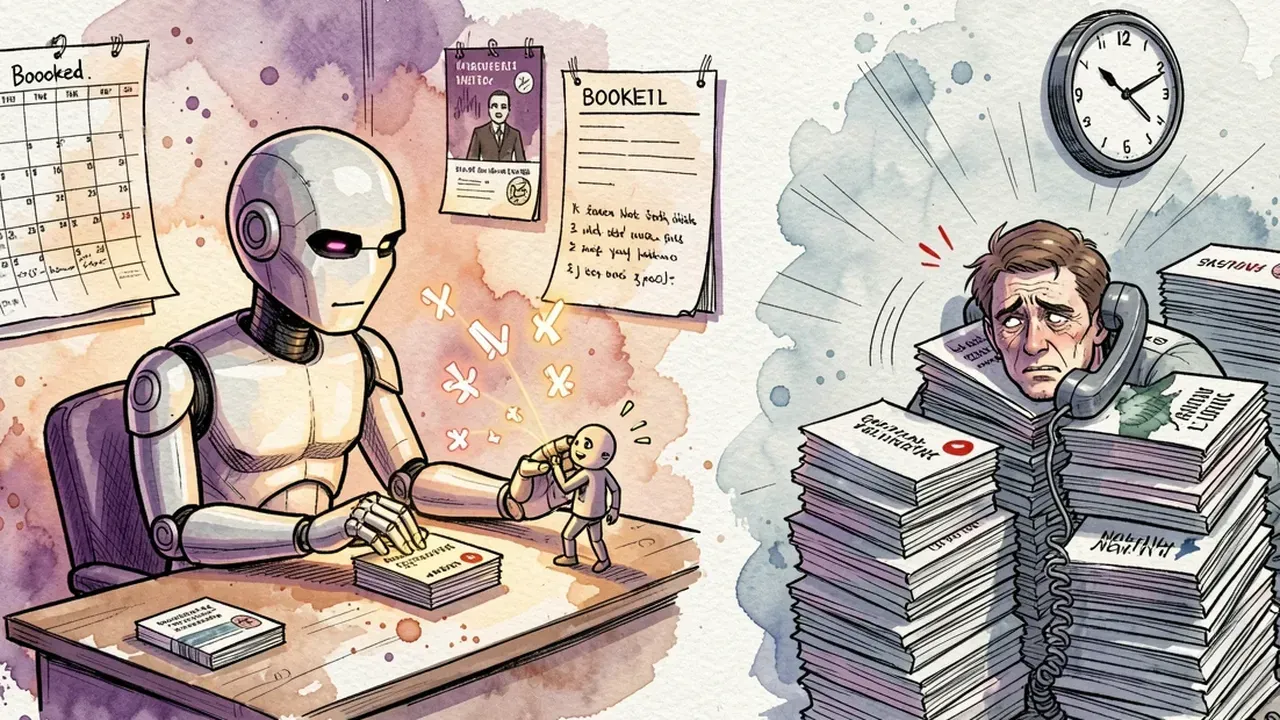
A good SDR converts because they pay attention: they read the lead’s company, adjust the hook, pick the right moment to reach out. The problem is that attention doesn’t scale. Outbound needs high volume to generate enough meetings, and high volume is the enemy of attention.
What breaks first, in practice:
- Research turns into a shortcut. Without time to look at every company, the SDR generalizes the message. The lead spots it in the first line and ignores it.
- Cadence stalls at the slowest rep’s pace. Every SDR follows their own rhythm. Some send the second touch the next day, others forget for a week. The pipeline gets uneven.
- Booking turns into a message thread. “How about Tuesday at 10?”, “can’t, how about Thursday?”, three back-and-forths later the meeting still isn’t on the calendar and the lead has cooled off.
- Hiring more people doesn’t scale linearly. Doubling the SDR team doesn’t double revenue, because the bottleneck isn’t willpower, it’s repetitive task volume per available hour.
That’s exactly the kind of work (rule-based, volume-sensitive, with research and personalization that follow a pattern) an AI agent handles without getting tired and without dropping below the quality of the best SDR’s best week.
How an AI agent handles outbound prospecting
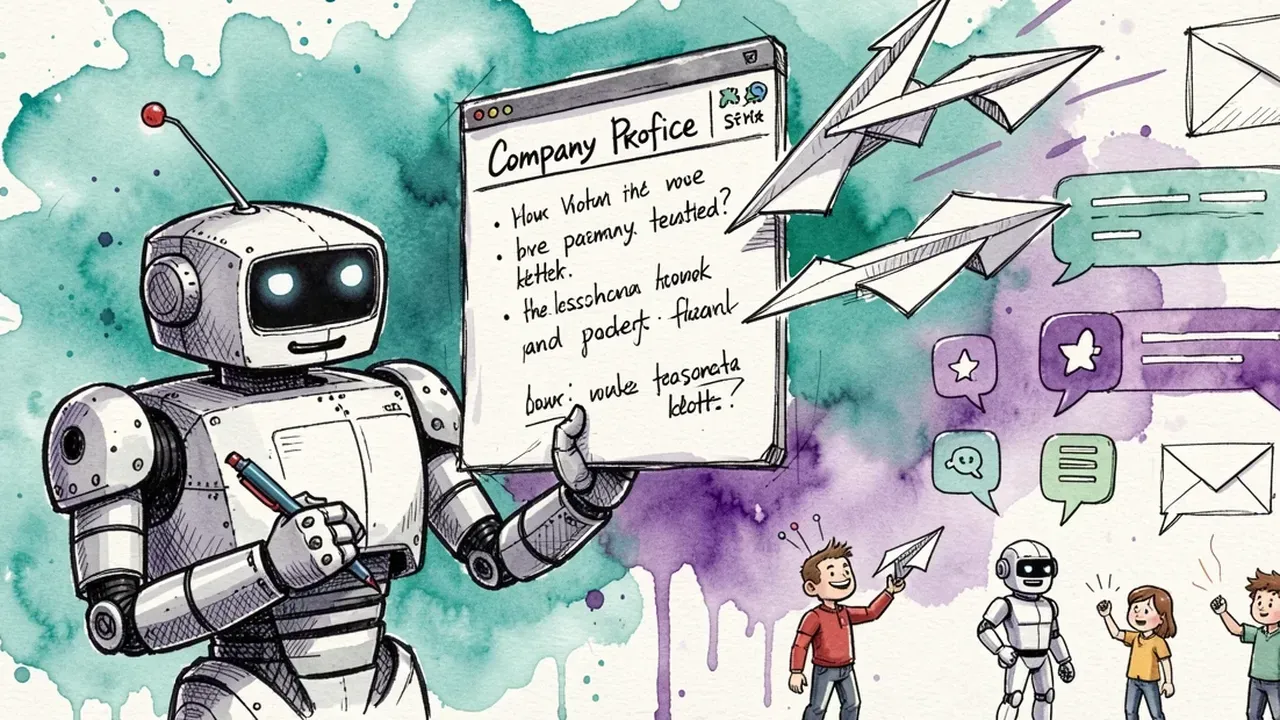
The prospecting agent works in three steps, in the same order a good SDR would follow manually, just without skipping any of them for lack of time.
- Research. Before writing a single message, the agent reads what’s available about the lead and the company: website, role, industry, context signals pulled from connected tools (CRM, LinkedIn, the source form). That’s the base of personalization, not decoration.
- Real personalization. The message references something specific to that lead, not a mail-merge field with the name swapped in. The agent varies the angle by profile: an operations manager gets one hook, a small business owner gets another.
- Multichannel outreach with cadence. WhatsApp, email, LinkedIn, whichever channel fits the lead’s profile. The agent follows the touch sequence you designed, respects the interval between them, and stops at the right moment: when the lead replies, asks for a pause, or clearly isn’t the right fit right now.
The agent also handles first-level objections (“no budget right now”, “send more info”, “who are you”) with a reply that keeps the conversation alive, without inventing a promise the product can’t keep. Anything more complex gets escalated to a human with the full history, so the lead never has to repeat themselves.
How it qualifies the lead and books the meeting on its own

Prospecting that doesn’t end in a booked meeting is just noise. What separates a good agent from a bot that only sends messages is what happens after a lead replies interested.
- A clear qualification bar. You define what makes a lead worth the meeting: company size, contact’s role, intent signal, rough budget. The agent applies that bar to every reply, with no “this one sounds excited” bias.
- Qualifying questions inside the conversation itself. Instead of sending a separate form, the agent asks what it needs within the natural flow of the chat, the way a good SDR would over WhatsApp.
- Direct booking, no back-and-forth. The agent reads the rep’s real availability and offers slots that already fit the calendar. The lead picks one, the invite goes out automatically, nobody trades five messages to lock a time.
- Handoff with full context. The rep receives the qualified lead with a summary of the conversation, the criteria it met, and the meeting already on the calendar. They walk into the call already knowing who they’re talking to, not finding out live.
A lead that doesn’t clear the bar doesn’t become a meeting. It stays in a lighter nurture cadence or gets dropped, which is also a win: the rep only gets meetings worth their time.
Common mistakes that make an AI SDR sound robotic
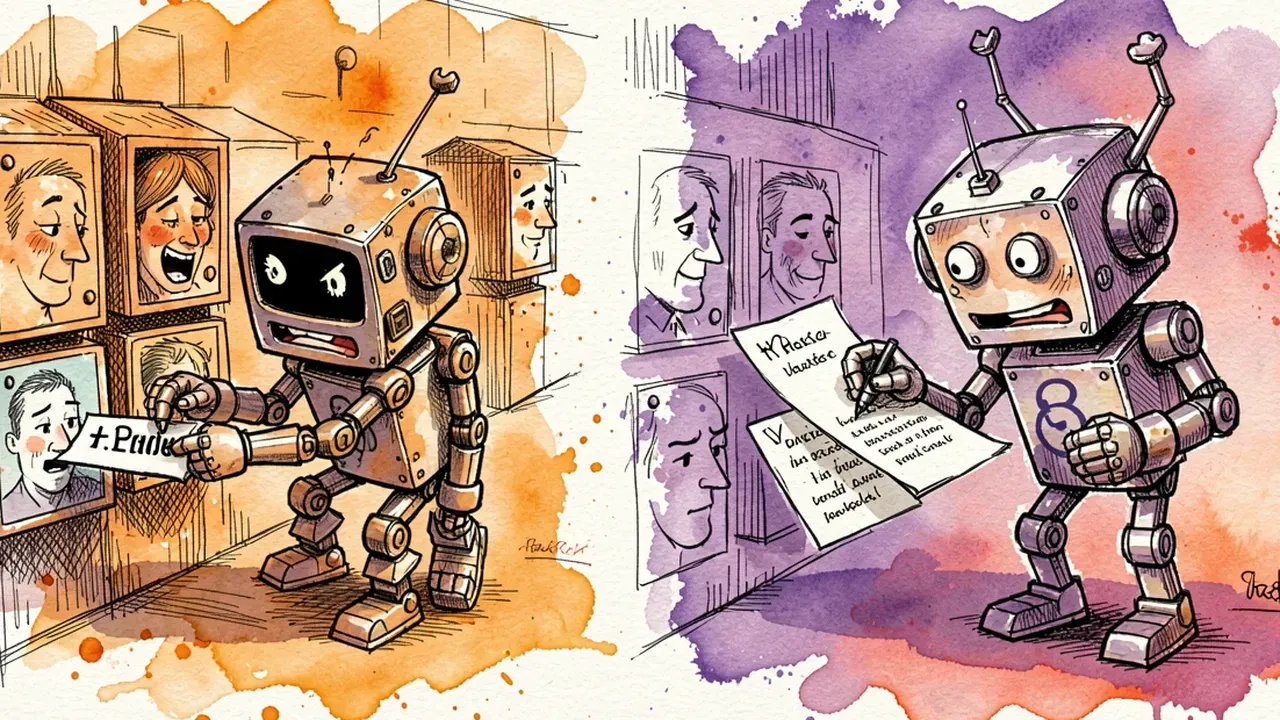
The gap between an AI SDR that converts and one that just annoys people comes down to four things that tend to get skipped when setting the agent up:
- Fake personalization. Swapping only the name and company into a fixed template is easy to spot and hurts the brand more than it helps. The agent needs to reference something that only makes sense for that specific lead, not an auto-filled field.
- Cadence with no attempt limit. An agent that keeps insisting indefinitely turns into spam and tanks the reputation of the sending number or domain. Set a cap on touches per lead and a clear exit rule.
- Ignoring a “not now” signal. A lead who asks to be contacted again in three months needs to come back into the cadence in three months, not tomorrow. Treating every silence as an objection to overcome is the most expensive mistake, because it burns a lead who just needed time.
- Booking without confirming context. Locking in a meeting just because the lead said “sure, maybe” without checking the qualification bar fills the rep’s calendar with calls that won’t close. One less booking, fully qualified, beats a full calendar that wastes the rep’s time.
Every one of these is a configuration choice, not a limitation of the technology. A well-tuned agent sounds like the team’s best SDR on their best day, every day.
How to set up an AI SDR in your operation

Setting this agent up is faster than it looks, if the decisions come before the tool.
- Define the ICP and the qualification bar. Who’s the ideal lead and what has to be true for that person to earn a meeting. Without that written down, the agent has nothing to apply.
- Write the outreach angle, not a fixed script. Give it the problem you solve, the hook per segment, and examples of a good touch. The agent varies from there instead of repeating the same line to everyone.
- Design the multichannel cadence. How many touches, on which channel, at what interval. A fast first touch, then spacing out the following ones, always with a clear exit when the lead asks for one.
- Connect the calendar and the CRM. The agent needs to see the rep’s real availability and log every touch where the team already tracks the pipeline, without anyone copying data from one place to another.
- Wire up the handoff with guardrails. Define when the agent escalates to a human (complex objection, out-of-pattern request, urgency signal) and the tone it should hold until then.
On a conversation-driven platform, you describe this flow in plain language and the agent is born with the qualification bar, the cadence, the channels, and the calendar integration already configured, no flowchart building, no prompt writing from scratch.
Once it’s running, track three numbers to know if it’s working: reply rate on the first message, percentage of conversations that turn into a booked meeting, and average time between first contact and the meeting on the calendar. When all three improve together, the agent is doing the work you were short-staffed on, not just generating empty volume.
Tired of losing meetings because there aren’t enough hands to prospect? On SquadOS you build the AI SDR by chatting in AgentMaker: describe the ICP, the angle, and the cadence, connect WhatsApp, email, calendar, and CRM among 100+ native integrations, and the agent researches, reaches out, qualifies, and books meetings on its own, with tone guardrails and a handoff to the rep at the right moment.