Chatbot vs AI Agent: What's the Difference and When to Use Each
A chatbot follows a fixed script. An AI agent decides, uses tools, and acts on its own. Learn the technical difference and when each one fits your business.
On this page
A chatbot and an AI agent are not the same thing, even though the market treats the two terms as interchangeable. The difference is easy to explain and expensive to ignore: one follows a script, the other decides what to do on its own.
If your company is choosing between building an automated FAQ or setting up an AI team that handles entire processes, understanding this difference keeps you from buying too little (or too much) technology for the problem you actually have.
What a chatbot is
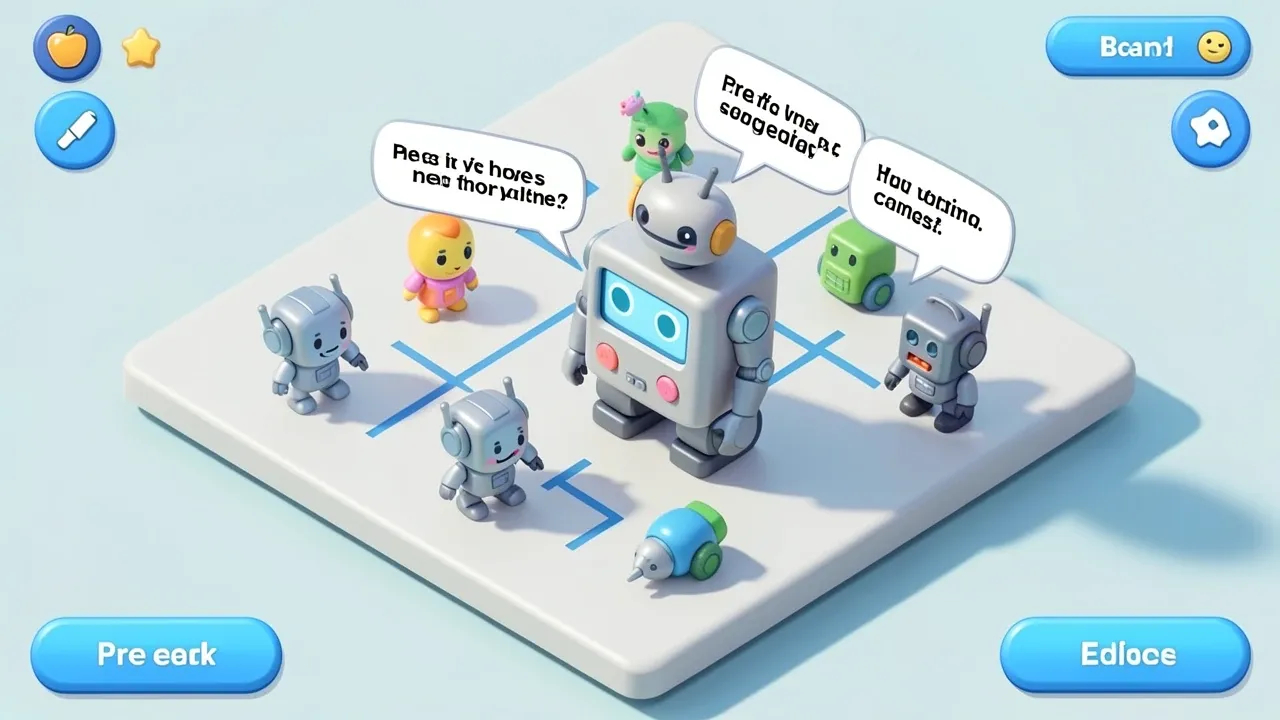
A chatbot is a conversation program with a fixed flow. It responds inside a script: a decision tree, buttons, or a language model that only knows how to answer questions within a fixed knowledge base.
Traits of a classic chatbot:
- Follows a pre-programmed script (if the user types X, it replies Y).
- Doesn’t make decisions outside what was planned for.
- Doesn’t execute actions in other systems: it only talks.
- Scales poorly for exceptions. When a question falls outside the script, it stalls or hands off to a human.
That’s the right technology for one specific case: repetitive questions with a predictable answer. “What are your business hours?” is a chatbot question. “Renegotiate my contract based on my payment history” is not.
What an AI agent is
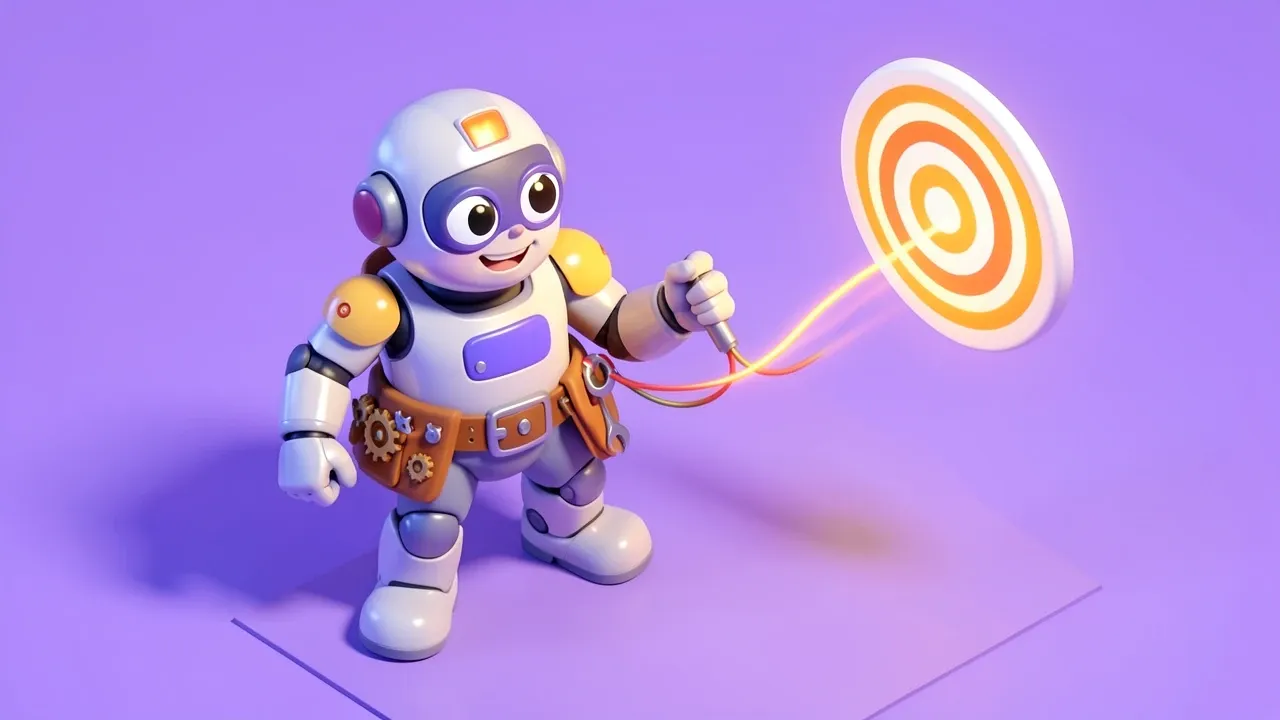
An AI agent is different by definition: it decides the next step instead of following a fixed script. It receives a goal, has access to tools (CRM, spreadsheet, API, knowledge base), and chooses how to reach the outcome.
Three things only an agent does:
- Reasons over new context. It doesn’t need someone to have anticipated that exact question in a script.
- Uses tools. Queries a CRM, opens a ticket, sends an email, updates a spreadsheet. Real action, not just text.
- Chains steps. To answer “why is my order late”, the agent can check the logistics system, verify payment status, and only then formulate the answer, all without a human designing that flow step by step.
On SquadOS, this kind of agent gets built by conversation in AgentMaker: you describe what you want to automate, and the platform writes the prompt, picks the model, connects the right tools, and wires up the knowledge base. No prompt engineering required.
Chatbot vs agent: the difference in practice
| Chatbot | AI Agent | |
|---|---|---|
| Logic | Fixed script, decision tree | Dynamic reasoning toward a goal |
| External tools | None (text only) | Queries CRM, API, spreadsheet, internal systems |
| Exception outside the script | Stalls or hands off to a human | Handles the new case within the given goal |
| Setup | Manual flowchart, maintained by hand | Described in plain language, improves on its own |
| Where it delivers value | Repetitive single-answer questions | Multi-step processes with decisions |
The confusion between the two exists because a lot of today’s chatbots run on a language model under the hood. That makes the conversation feel more natural, but it doesn’t make it an agent: if it doesn’t decide which tool to use and doesn’t act on other systems, it’s still a chatbot with an LLM front end.
When to use each one
When a chatbot is enough
You don’t always need an agent. A chatbot is still the right tool when:
- Question volume is high, but the range of answers is small and stable. Hours, address, return policy.
- The process doesn’t change often, so keeping a fixed script doesn’t turn into weekly manual work.
- There’s no real integration with any system: it’s conversation, full stop.
Forcing a full agent onto that case spends more budget and setup time for a gain the user won’t even notice.
When you need an agent
An agent pays off when the process involves decisions, variable context, or integration with a system. Some common business examples:
- Support that needs to check order status, payment status, or customer history before replying. You can’t script every combination in advance.
- Lead qualification that changes the next question based on the previous answer, and logs everything in the CRM on its own.
- Internal IT or HR support that needs to open a ticket, check policy, and answer in plain language at the same time.
- Sales follow-up that decides the next touch based on what the lead answered, not a fixed schedule.
In every one of these cases, the bottleneck isn’t “talking better”, it’s acting inside a real system. That’s exactly where the chatbot stops and the agent starts.
Governance and how to decide
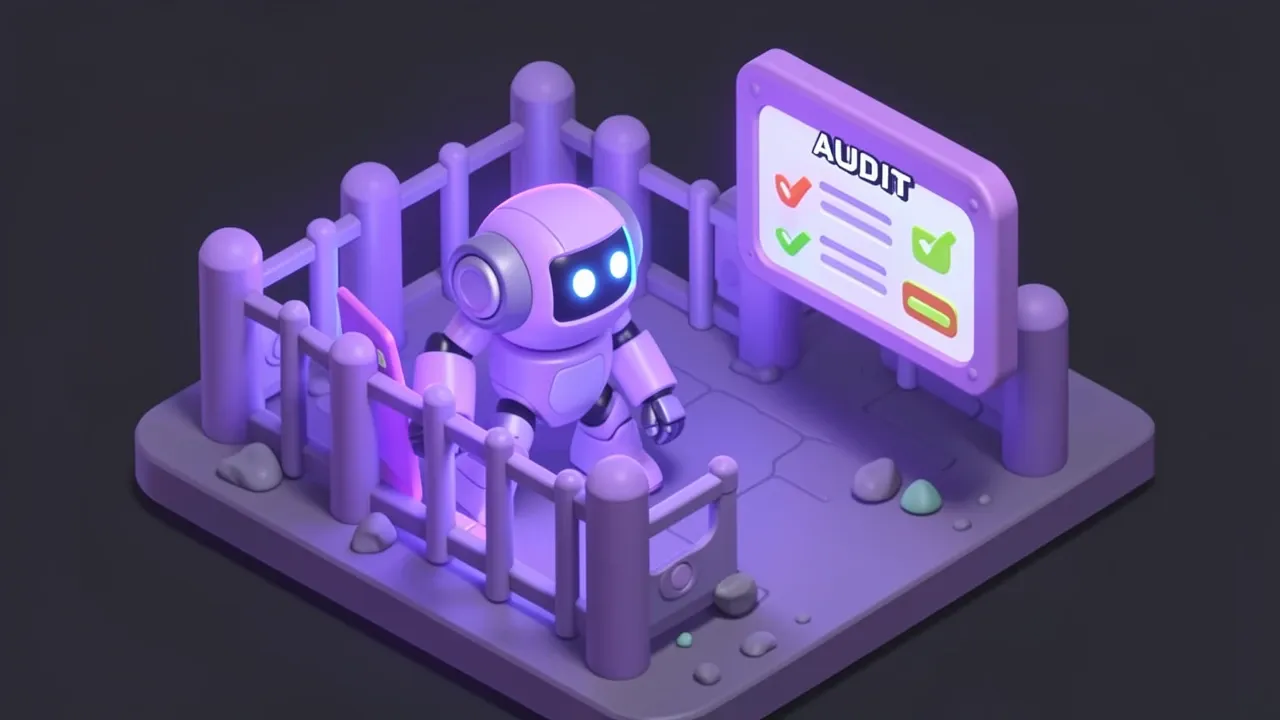
Giving an agent autonomy to act on real systems (CRM, ERP, customer database) raises a question a chatbot never had to answer: who audits what the agent did, and what stops it from acting outside what was agreed?
That’s why an AI agent in production needs native guardrails: hallucination protection, sensitive data (PII) handling, and an audit trail of every action taken. Without that, you traded a predictable script for a black box touching real company data.
A simple question splits the two cases for your company: does the process involve more than one context-dependent decision, or does it touch another system?
- No, it’s a direct question and answer → a chatbot works, and works cheap.
- Yes, there’s chained decision-making or action inside a system → you need an agent, not a bigger script.
Most companies start with a chatbot, stretch the script until it breaks, and only then migrate to an agent. You can skip that step: map where the process has a real decision before picking the tool.
If your problem is support or internal automation with real decisions, not a script, SquadOS builds that agent while you talk it through: AgentMaker writes the prompt, picks from 30 models, and connects 100+ integrations, with native guardrails from day one.