ISO 42001 compliance: what the AI management standard requires
ISO 42001 is the first international standard for AI management systems. See what it requires, who actually needs certification, and how to simplify compliance.
On this page
A vendor sends over a compliance questionnaire, and the first question is: “does your company follow ISO 42001?”. A year ago, almost nobody outside a handful of compliance teams could answer that. Today it shows up in enterprise RFPs, investor due diligence, and security questionnaires from bigger customers. ISO 42001 has become the fastest way to prove your company isn’t running AI in the dark.
What ISO 42001 actually is
ISO/IEC 42001 is the first international standard specifically for AI management systems, published by ISO in December 2023 and developed by the technical subcommittee dedicated to AI within ISO/IEC JTC 1.
It follows the same logic as other management standards the market already knows: instead of dictating fixed technical rules, it requires the company to run a living management system, with policy, defined roles, risk assessment, and a continuous improvement cycle. The difference is the object each standard governs.
| Standard | Governs | What it guarantees |
|---|---|---|
| ISO 27001 | Information security | Data protected against unauthorized access |
| ISO 9001 | Process quality | Consistent, repeatable process |
| ISO 42001 | AI management | AI built, bought, and run with risk assessed |
It isn’t law. It’s a voluntary standard, with certification carried out by an independent auditor for whoever wants, or needs, to prove it formally. But the content became a practical reference even for companies that never go after the certificate, because it describes, with real precision, what “responsible AI use” actually means.
What the standard requires in practice
In practice, ISO 42001 asks the company to answer, with documentation and evidence, a set of basic questions about every AI system it uses or offers.
- A formal AI policy. Who approves the use of a new model or agent, and on what basis.
- Risk assessment per system. Bias, robustness, safety, and transparency assessed before the system goes into production, not after an incident.
- Impact assessment. The effect on whoever the system touches (customer, employee, third party), documented before launch.
- Data and supplier management. Where the data that trains or feeds the system comes from, and what control the company has over a third-party model it’s using.
- Continuous monitoring. Tracking system behavior after it’s live, not just during testing.
- Incident response plan. What the company does when the system errs, hallucinates, or exposes data it shouldn’t.
- Internal audit and periodic review. The plan, do, check, act cycle every ISO management standard requires, applied to AI.
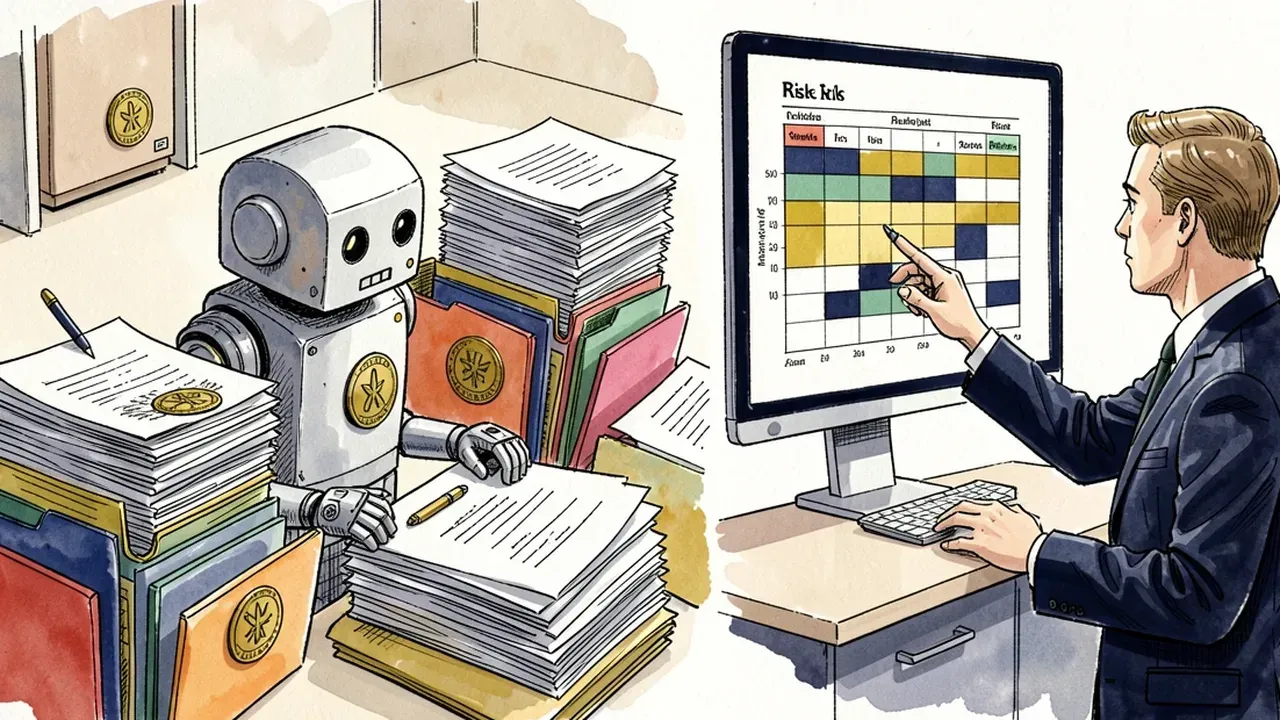
None of this is exclusive to companies chasing certification. It’s basically the definition of having real control over the AI running inside the company.
Who actually needs certification (and who doesn’t)
Formal ISO 42001 certification isn’t mandatory for almost any company today, but it makes sense for a specific group.
Certification is worth pursuing if your company:
- Sells AI to other businesses (AI SaaS, consulting, integrators) and enterprise customers ask for formal proof of governance during procurement.
- Operates in a regulated industry (finance, healthcare, public sector) where the regulator or external auditor already demands this kind of evidence.
- Bids on contracts or RFPs that list 42001 as a tiebreaker or a prerequisite.
Worth flagging: certification proves management maturity, it doesn’t replace specific regulation. A company certified against 42001 still has to look separately at data protection law where it operates and, if it serves the EU, the EU AI Act. These are complementary, not interchangeable.
If none of the three cases above fits, formal certification probably isn’t worth the effort right now. What’s worth it, for nearly any company using AI day to day, is adopting the practice the standard describes, without chasing the paperwork: written policy, assessed risk, usage audit trail, sensitive data protected. That alone solves most of the real problem: using AI without knowing what’s happening inside it.
Where most companies get stuck before even thinking about certification
The problem is almost never that the standard is complex. It’s that the company doesn’t have the basic information organized enough to even start filling out the assessment.
Clear signs your company is stuck well before ISO 42001:
- Nobody can list, off the top of their head, every AI tool teams are using today.
- There’s no log of who talked to which agent, about what.
- Risk assessment for a new model, when it exists at all, lives in a forgotten spreadsheet, not a repeatable process.
- Every department picked or configured AI its own way, with no shared standard.
That’s the picture of a fragmented AI operation. And fragmentation is the exact opposite of what any management standard, ISO 42001 included, tries to fix. You can’t audit what was never logged, and you can’t assess the risk of a tool leadership doesn’t even know exists.

How native governance simplifies compliance
The fastest way out of fragmentation, and closer to what ISO 42001 asks for, is centralizing AI use in an environment that already ships with governance built in, instead of trying to manually document a dozen loose tools after the fact.
In practice, that means:
- A single hub, where every AI conversation, internal or external, happens inside the company’s control, not scattered across personal accounts.
- Native audit trail on every execution, automatically logging who asked what, to which agent, with what result. That’s the evidence the standard asks for, generated on its own, with no manual work after the fact.
- Active guardrails against hallucination and sensitive data leakage, applied before the response goes out, not discovered later in an incident.
- Documented role and approval behind every published agent, instead of “someone on the team set this up once and nobody remembers why.”

That’s the design behind SquadOS: a governed internal hub, with an audit trail on every conversation and native guardrails against hallucination and PII, instead of AI scattered across personal accounts and a forgotten risk spreadsheet. It won’t replace formal certification for companies that genuinely need it, but it solves, right away, the part most companies haven’t even organized yet: knowing what their own AI is doing, with whom, and with what data.