AI automation in manufacturing: where to start without stopping the production line
Manufacturers can automate maintenance, purchasing and reporting with AI agents without touching the production line. See three processes to start with.
On this page
Manufacturing is the most cautious sector when it comes to AI, and for a fair reason: nobody wants to be the plant manager who let a bot touch a line that generates millions per hour. That caution is reasonable, but it blocks the wrong kind of automation. The AI that actually makes sense on a factory floor today doesn’t touch a single machine. It touches paperwork, tickets and spreadsheets, which is where most of a team’s time actually disappears.
This guide covers three manufacturing processes you can already automate with AI agents without any line risk, the most common mistake teams make when they start in the wrong place, and how to get this running in weeks.
Take the typical day of a maintenance supervisor at a mid-size plant: requests come in by phone, by radio and through a WhatsApp group chat, three different channels for the same kind of request. By the end of the shift, nobody quite knows how many requests went unanswered, because none of those three channels turns into an automatic record. That friction has nothing to do with machines, sensors or the production line. It’s information management, and that’s exactly where an AI agent fits in without touching any operational risk.
Why manufacturing is the last sector to try AI
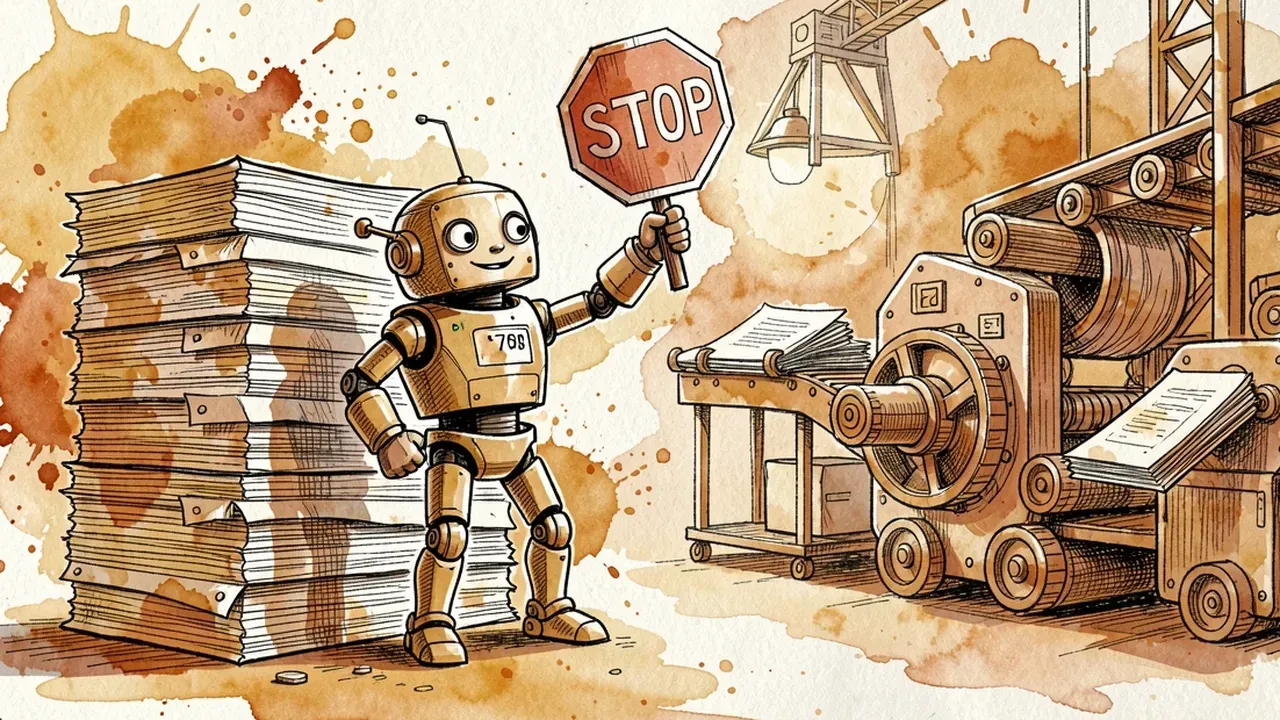
Service industries adopted AI fast because the worst case scenario is a wrong email. In manufacturing, the worst case scenario for an automation error is a stopped production line, and that costs real money per minute. That risk calculation is correct, but it pushes many plants to the wrong conclusion: “AI isn’t for us yet.”
What changes that calculation is separating two worlds that tend to blur together for decision makers:
- The shop floor. Machines, sensors, the production line itself. Automating here is an industrial automation project, heavy engineering, not something a conversational AI agent does.
- The operations office. Maintenance, purchasing, quality, production planning. Processes that today run on spreadsheets, email and WhatsApp groups, full of manual rework nobody actually defends.
The second world is where AI delivers value fast, with zero risk of stopping anything.
3 processes to automate first
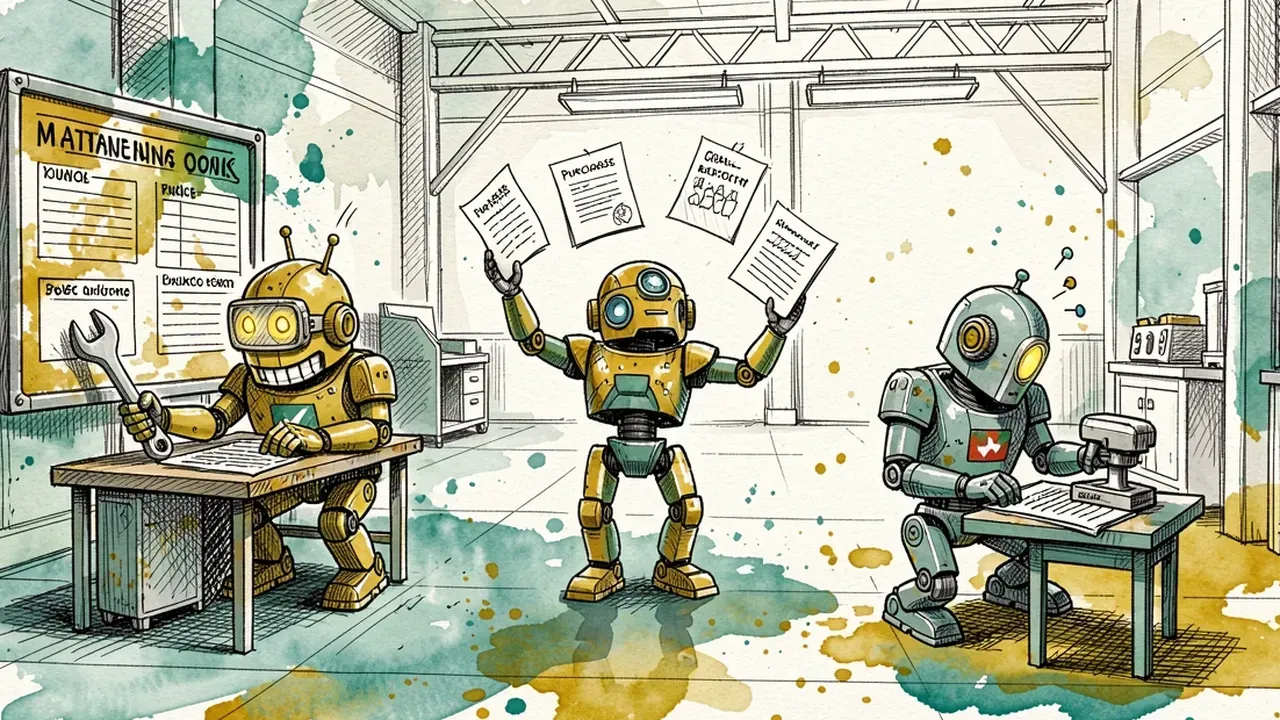
Three processes account for most of the wasted time in an industrial operation, and all three already work well with an AI agent today:
- Maintenance requests. Today an operator calls, texts or fills out a paper form, and the ticket gets lost in a queue until someone remembers to check it. An agent receives the request over WhatsApp, classifies urgency, opens the ticket in the right system and notifies the responsible team immediately.
- Purchasing and inventory. Restocking depends on someone noticing low inventory and emailing a supplier. An agent monitors stock levels, triggers the quote request on its own and summarizes supplier responses for whoever makes the call.
- Production and quality reports. At the end of a shift, someone manually compiles downtime, scrap and target numbers into a spreadsheet, every single day. An agent pulls that data directly from the system and delivers the report ready, without waiting on anyone to type it in.
None of the three touch a machine. All three free up people who currently spend hours a day copying numbers from one place to another.
A plant that automates just maintenance requests already feels the difference within a few weeks. If a maintenance team currently loses an average of 20 minutes per request just figuring out what was asked and who should handle it, that’s 5 hours of pure triage on a shift with 15 requests, every single day. An agent that classifies and routes the request the moment it arrives hands those hours back to the team to do what only qualified people can do: fix what’s actually broken.
The mistake that stalls the project

The most expensive mistake teams make is trying to automate the shop floor first, because “that’s where the big win is.” In practice, that project stalls fast: it needs integration with industrial control systems (SCADA, PLC), safety approval, and months of validation before anything actually runs.
Meanwhile, the operations office keeps losing hours a day to manual process, and nothing got automated because the big project never left the drawing board. The right order is the opposite: start with the office process that already runs on text and spreadsheets, prove value in weeks, and only then evaluate shop floor automation as a separate project, with its own engineering team.
It’s worth noting the two projects don’t compete for the same budget or the same team. An AI agent that classifies maintenance requests gets configured by people who already understand the process, no dedicated automation engineer required. That means a plant can run both tracks in parallel, with the fast win from the office funding the patience the shop floor project needs.
How to get this running without a 6-month IT project
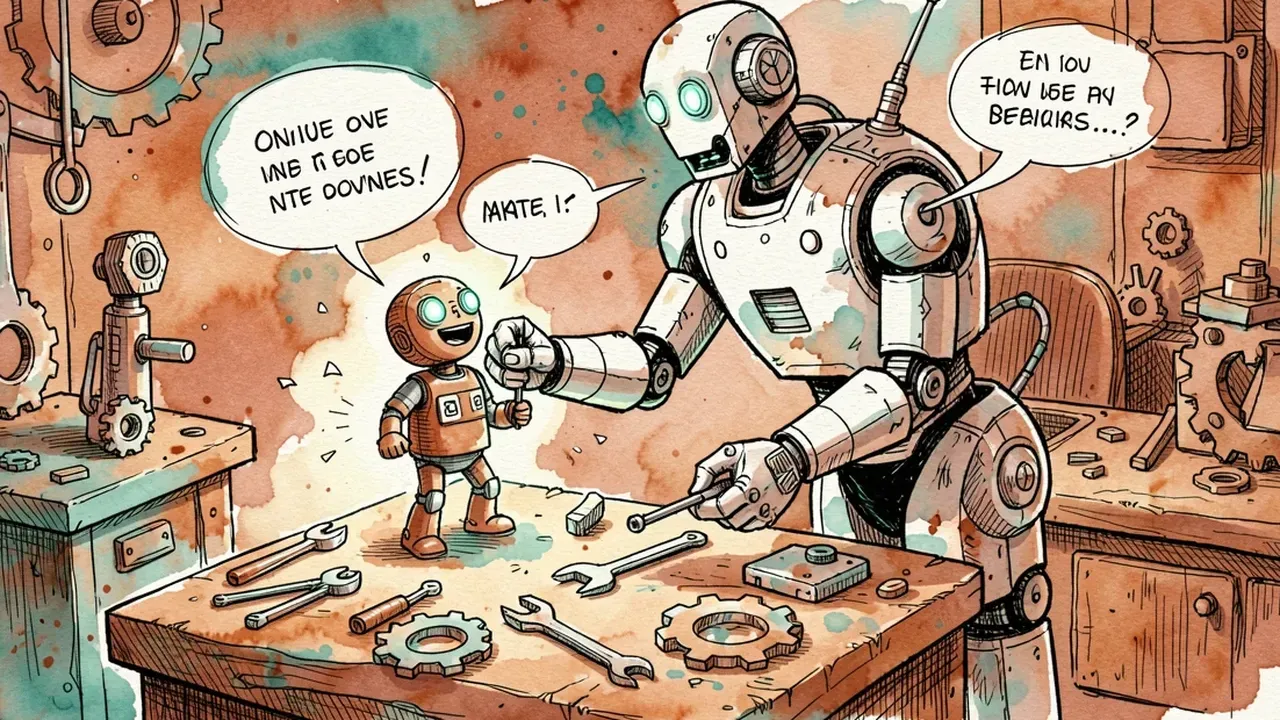
The fastest way to start isn’t writing new software, it’s building an agent by talking to it, without waiting on an internal dev queue. In AgentMaker, you describe the process (for example, “I want an agent that receives maintenance requests on WhatsApp and opens a ticket”) and the agent comes out already assembled, with prompt, integrations and knowledge base connected.
Three things worth checking before putting this into production on a plant floor:
- Start with one process. Maintenance, purchasing or reporting, pick whichever hurts most today and prove value there before expanding.
- Turn on guardrails from day one. Supplier data and production information can’t leak, and the agent needs to know when to escalate to a human instead of guessing.
- Measure before and after. Average ticket opening time, quote turnaround, hours spent on manual reporting. A concrete number convinces leadership better than a promise of efficiency.
In practice, a plant can have its first agent (usually the maintenance request one) in production within two to three weeks, counting flow design, ticketing system integration and a short adjustment period with the team that will use it daily. It’s not an endless pilot: after that initial tuning, the agent runs on its own, and the operations team decides whether to expand to the next process using the same pattern.
If your manufacturing operation wants to automate maintenance, purchasing and reporting without stopping the line or waiting six months on an IT project, SquadOS builds these agents with you by talking through AgentMaker, connects to your 100+ native integrations, and runs with sensitive-data guardrails from day one.