AI sentiment analysis in customer service: catch an unhappy customer before you lose them
AI sentiment analysis in customer service catches frustration in the text before a complaint turns into churn. See the signals, the triggers, and how to set it up.
On this page
Customers almost never open a chat by saying “I’m unhappy.” They type in all caps, ask the same question a third time, or go quiet mid-conversation and come back an hour later even angrier. Sentiment analysis is AI reading those signals live, in the middle of the conversation, instead of finding out about the frustration in a satisfaction survey after the customer already churned.
That timing matters because finding out late is expensive. A silent complaint nobody catches turns into a cancellation, a low CSAT score, or a public review. An AI agent that reads the tone of a conversation in real time can act before that happens: calm the customer down, bump the priority, or bring in a human at the right moment. This article covers how AI actually detects sentiment in a conversation, the practical signals worth watching, what to do once frustration shows up, and which metrics are actually worth tracking.
What sentiment analysis is and how AI reads it inside a conversation
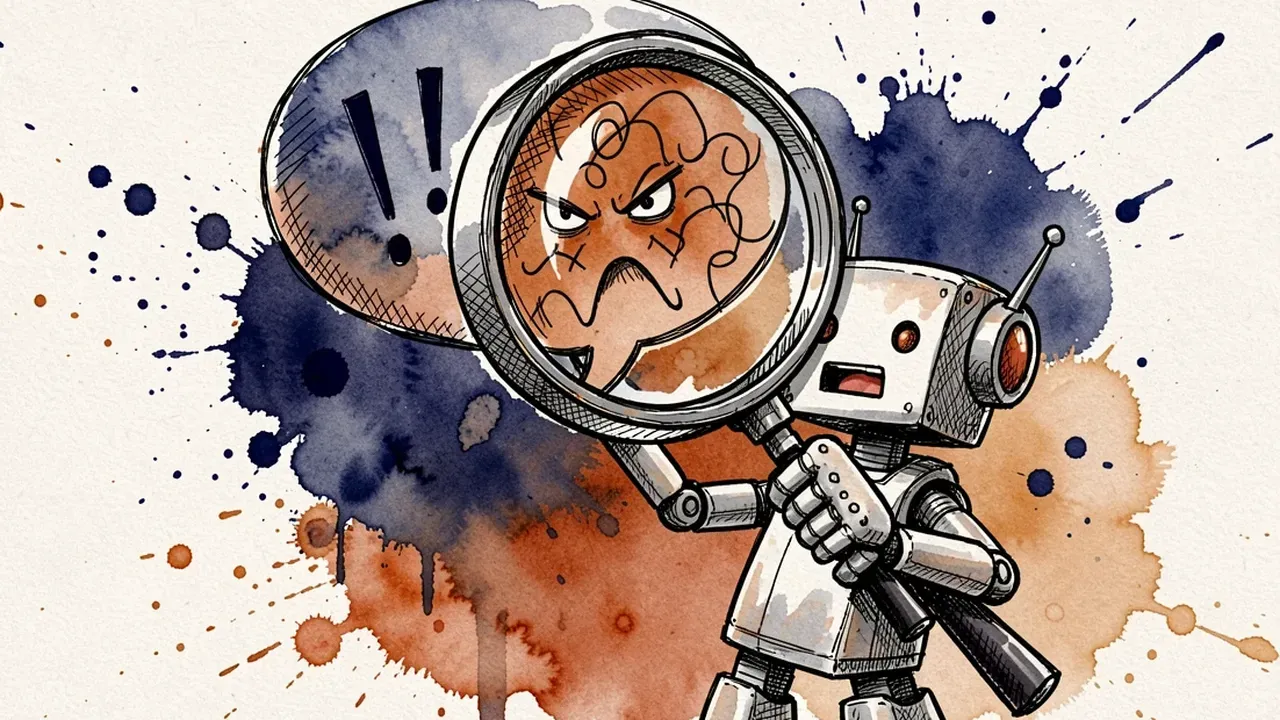
Sentiment analysis is AI classifying the emotional tone of a message (positive, neutral, negative) straight from the text, with no direct question to the customer needed. The agent reads a sentence the way an experienced agent does: not just what was said, but how it was said.
The model looks at a set of signals baked into the text itself:
- Word choice. “It’s broken again” carries different weight than “it’s still not working.” Words like “terrible,” “ridiculous,” or “cancel” carry strong sentiment on their own.
- Punctuation and formatting. Excessive exclamation marks, ALL CAPS, ellipses that cut a sentence short. These are urgency or anger markers the raw text already gives away.
- Conversation pattern. Short, curt messages after long replies usually signal impatience. A long silence followed by a new message usually comes back loaded.
- Accumulated context. The third time a customer rephrases the same question weighs more than the first. The agent isn’t reading one message in isolation, it’s reading the whole thread up to that point.
The difference from a keyword filter is that AI understands meaning, not just terms. “This couldn’t be more perfect” and “this couldn’t be worse” share almost the same surface words and mean opposite things. An agent that only searches for “perfect” would get the first one wrong. One that understands language reads both correctly.
The signals that reveal an unhappy customer before the complaint is explicit
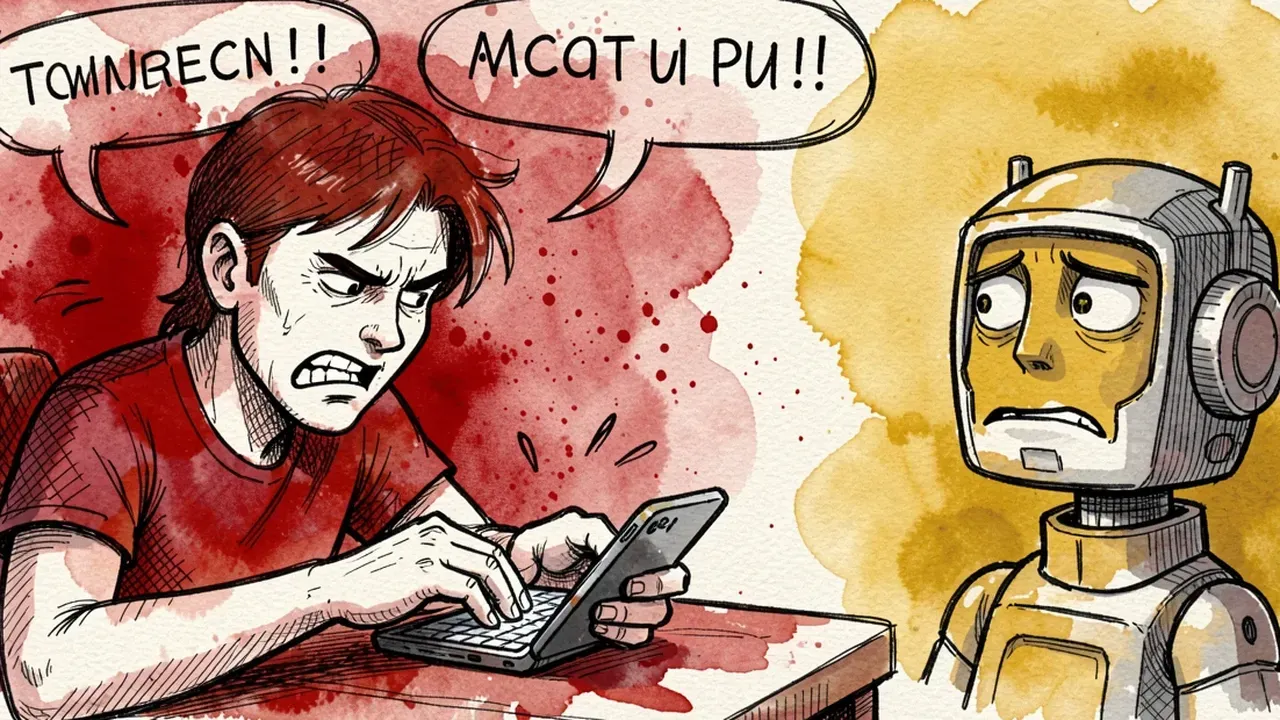
Most unhappy customers never use the word “unhappy.” It shows up in behavior, not vocabulary. The signals worth watching:
- Repeating the same question. If someone asks the same thing two different ways, the first answer didn’t land, and they’re already in “make sure I’m understood” mode.
- A sudden tone shift. Started polite, turned curt. This usually follows an unhelpful reply, and it’s the moment where the risk of escalating anger is highest.
- Artificial urgency. “I need this now,” “this is urgent” repeated multiple times in the same chat, even for requests that aren’t technically urgent. It signals accumulated anxiety or distrust.
- Comparing to a competitor or threatening to leave. “I’m going to cancel,” “I’ll switch to someone else,” “this never used to happen.” That kind of line almost always marks the turning point before the customer is actually lost.
- Going silent after a bad answer. A customer who disappears mid-conversation after an unsatisfying reply rarely comes back happy. They come back re-explaining from scratch, more impatient than before.
No single signal by itself means a lost customer. What matters is the agent recognizing the pattern in real time, not just after it turns into a formal complaint.
From detection to action: what the agent does once it senses frustration
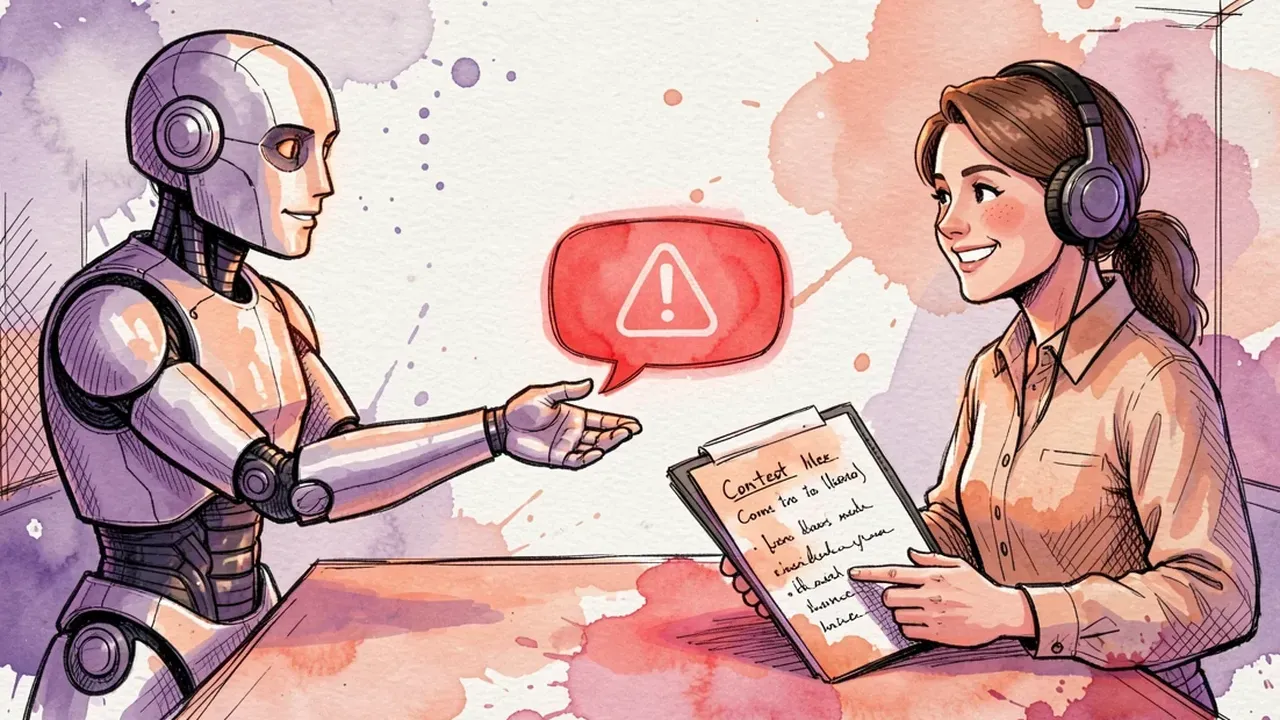
Detecting negative sentiment without acting on it is worthless. The value is in what the agent does with the signal. Three responses make sense, depending on intensity:
- Adjust the reply’s tone. Facing an already-irritated customer, the agent swaps the neutral script for a more direct reply, acknowledges the frustration before trying to fix anything, and cuts anything that reads generic or automated.
- Bump the queue priority. In an operation handling multiple conversations at once, a chat with strongly negative sentiment moves up. It shouldn’t wait in line behind trivial questions just because it arrived later.
- Escalate to a human. When negative sentiment lines up with another trigger (repetition without a fix, a risky request, a cancellation threat), the right move is to stop trying to solve it alone and bring in a person, with the history and the reason for the handoff attached.
The key point is that sentiment isn’t a metric that just sits in a report. It needs to change the agent’s behavior right there, inside the conversation itself. An agent that detects frustration and keeps replying the same way only confirms to the customer that nobody’s paying attention.
The metrics worth tracking (and the ones that just fill up a dashboard)
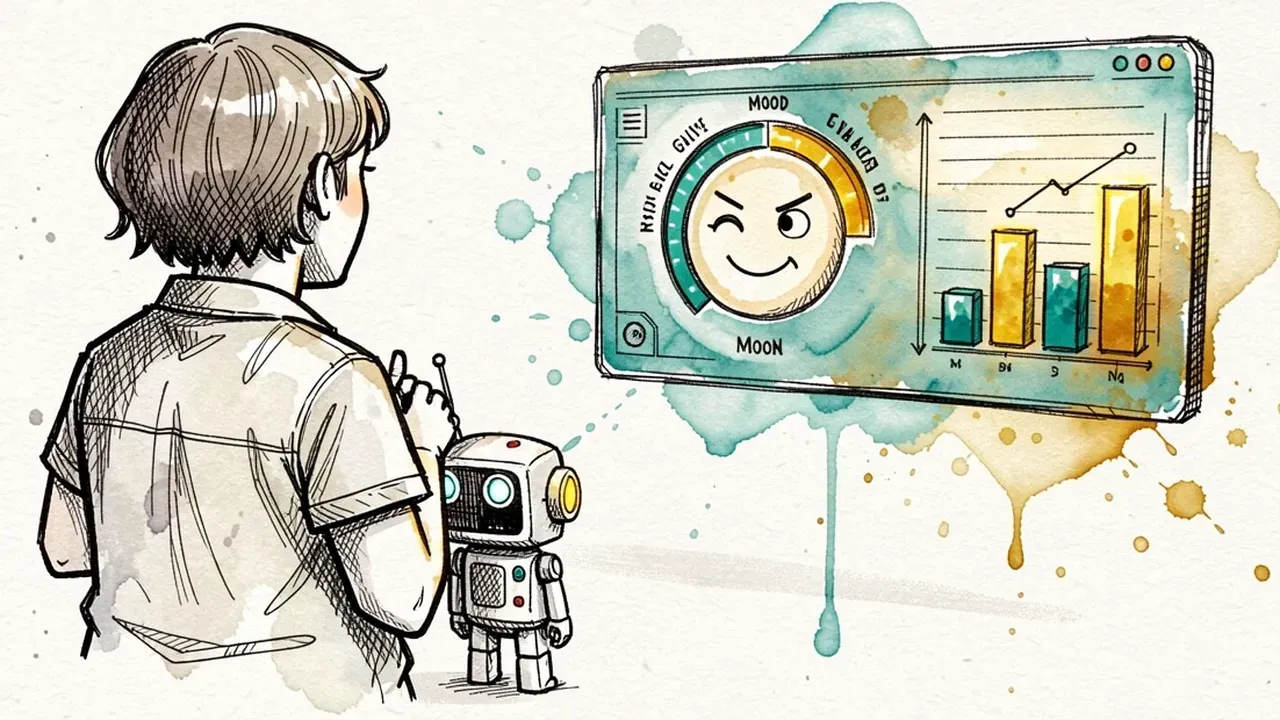
Sentiment becomes useful once it’s measured over time, not just chat by chat. The metrics that give a real signal:
- Rate of conversations with detected negative sentiment. Share of total chats that registered negative sentiment at any point. A sudden spike usually means something changed in the product, the process, or a recent script.
- Time to detection. The earlier in the conversation the agent catches frustration, the better the odds of turning it around before the customer gives up. Detection that only fires on the last message already arrived too late.
- Escalation rate tied to sentiment. How many negative-sentiment chats ended up with a human versus how many the agent resolved on its own. Both rates can be healthy depending on the case; the real problem is having zero visibility into it.
- Correlation with actual CSAT. When the sentiment detected during the chat matches the score the customer gives afterward, the metric is calibrated. When it doesn’t, it’s worth reviewing what the agent is counting as negative.
What’s not worth it: an isolated “sentiment score” that looks nice on a dashboard with nobody watching what action it drives. A customer service metric only matters when it changes a decision, whether that’s the AI acting in the moment or the team acting afterward.
Want an agent that doesn’t just answer, but also senses when a conversation is going wrong? On SquadOS you build external agents with AgentMaker, turn on native guardrails for tone and escalation, and connect WhatsApp, your website, and Telegram in one place. The agent handles support 24/7, catches frustration in real time, and brings in your team at the right moment, with the full context in hand.