Win back inactive customers: how a WhatsApp AI agent brings back people who stopped buying
Customers who stopped buying are revenue sitting idle in your database. See how a WhatsApp AI agent segments, reaches out and wins back inactive customers, no spam.
On this page
- What a win-back campaign is and why it costs less than selling to strangers
- Why the inactive list stays in the drawer
- How to segment who’s worth winning back
- How an AI agent runs the win-back on WhatsApp
- The message that brings people back (and the one that drives them away for good)
- How to measure whether win-back is working
- Where to start
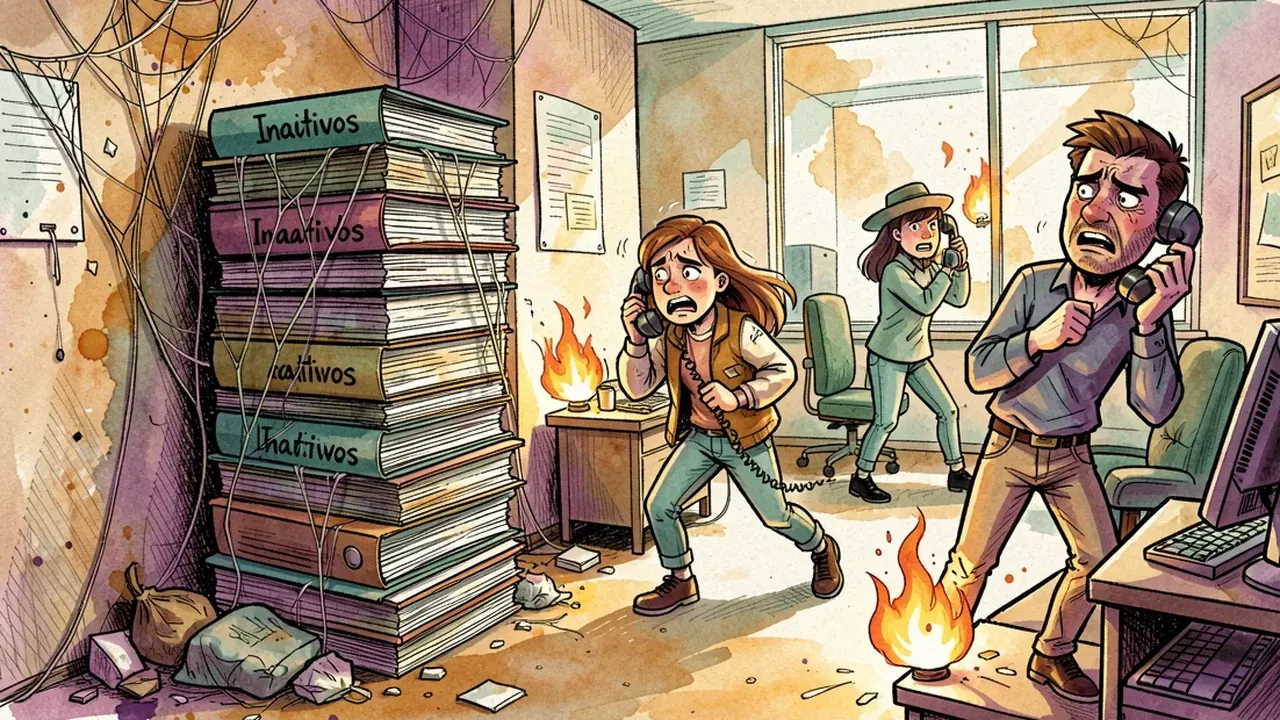
Every business has a list nobody looks at: the customers who bought once, twice, ten times, and then just stopped. They didn’t complain, didn’t cancel, didn’t ask to leave. They vanished.
That list is usually bigger than your active customer base. And it’s the cheapest source of revenue you have, because these people already know you, already trusted you once, and already have your number saved.
The problem is that winning them back takes work. Someone has to pull the report, sort out who’s worth the effort, write a message that doesn’t read like a mass blast, reply to whoever answers, and log all of it. On a small team, that gets filed under “when there’s time.” There’s never time.
A WhatsApp AI agent runs that whole cycle on its own. This article shows how.
What a win-back campaign is and why it costs less than selling to strangers
A win-back campaign is the process of identifying who stopped buying, understanding why, and bringing those people back with a targeted approach.
The reason it’s worth so much is simple math. A widely cited Harvard Business Review piece estimates that acquiring a new customer costs 5 to 25 times more than keeping an existing one. And Bain & Company found that a 5% increase in retention lifts profits by 25% to 95%, depending on the industry.
In other words: the same budget that brings in one cold lead from an ad, who still needs convincing from scratch, can bring back several customers who already know exactly what you deliver.
There’s a second reason people talk about less. Inactive customers tell you why they left. People who never bought can’t give you that. People who bought and stopped can: they switched suppliers, the price stung, a delivery was late, they forgot you existed. Each of those answers is product data no market research delivers this cheaply.
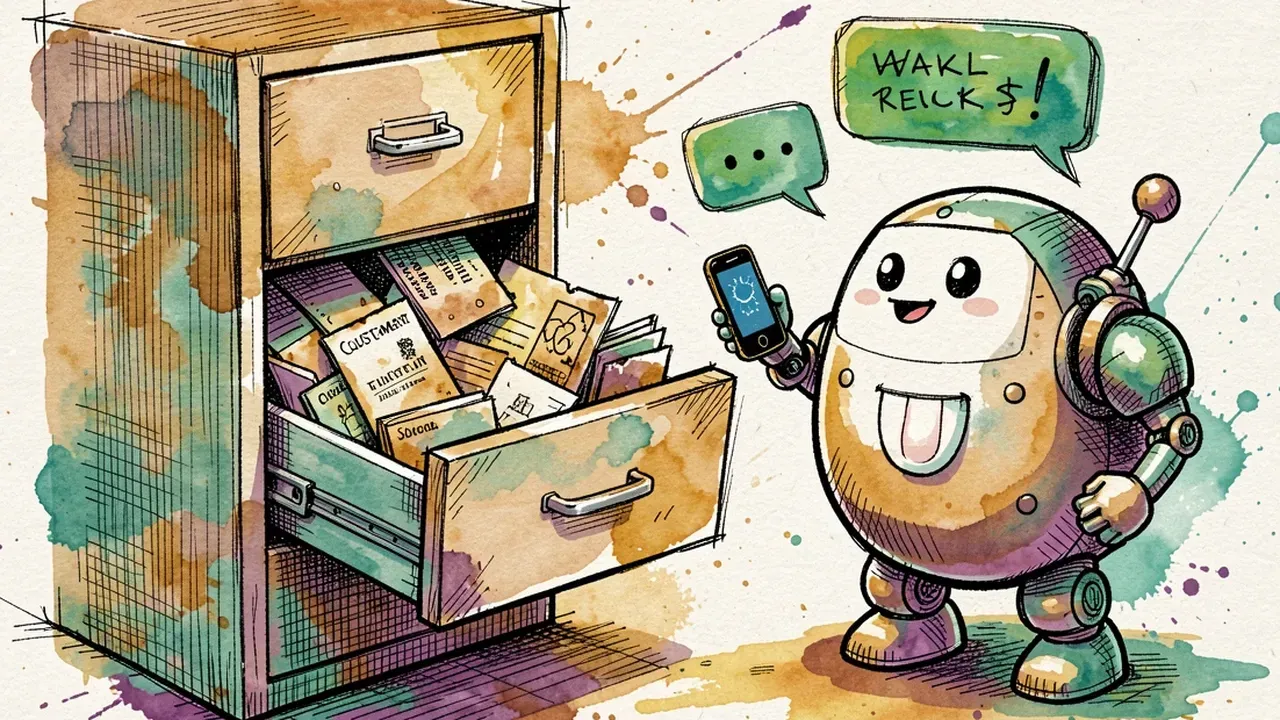
Why the inactive list stays in the drawer
The list stays in the drawer because win-back is a task with no owner, no deadline and no visible urgency. Nobody gets chased for it, and every step needs a free pair of hands.
Think about what has to happen for a win-back campaign to actually launch at a typical company:
- Someone exports the customer base and filters for no purchase in X days.
- Someone sorts who’s worth reaching out to from who isn’t.
- Someone writes the messages, one variation per profile.
- Someone sends them, customer by customer, or pays for a broadcast tool.
- Someone stands by to answer whoever replies.
- Someone logs who replied, who bought, who asked to stop.
That’s six “someones.” At a small business, it’s the same person already handling the day’s support queue. At a mid-sized one, it’s three departments that need to coordinate. Either way, the campaign loses to whatever fire breaks out that week.
The result is what you see everywhere: one win-back campaign a year, usually around Black Friday, thrown together last minute, same message to everyone. Response rate is low, everyone concludes that “win-back doesn’t work,” and the list goes back in the drawer.
How to segment who’s worth winning back
Not every inactive customer deserves the same approach. Before sending anything, split your base by three questions: how long since they stopped, how much they used to spend, and what the relationship looked like.
The most common model for this is called RFM: recency, frequency and monetary value. You don’t need fancy software. It’s a spreadsheet with three columns.
Recency is how long ago the last purchase happened. The cutoff depends on your cycle. For an aesthetics clinic, 90 days without a return visit is already a signal. For a supplement e-commerce store, 45 days. For a furniture store, a year is normal. Take the average gap between purchases in your base and double it: anyone past that is inactive.
Frequency is how many times they bought. Someone who bought once and disappeared probably tried you out and didn’t click, or doesn’t even remember you. Someone who bought eight times and stopped is a loyal customer something pushed away. The second is worth far more effort, and the message needs to acknowledge that history.
Monetary value is how much they spent in total. A high-ticket customer who went quiet might justify a call from the owner. A low-ticket customer justifies a well-crafted automated message, and that’s it.
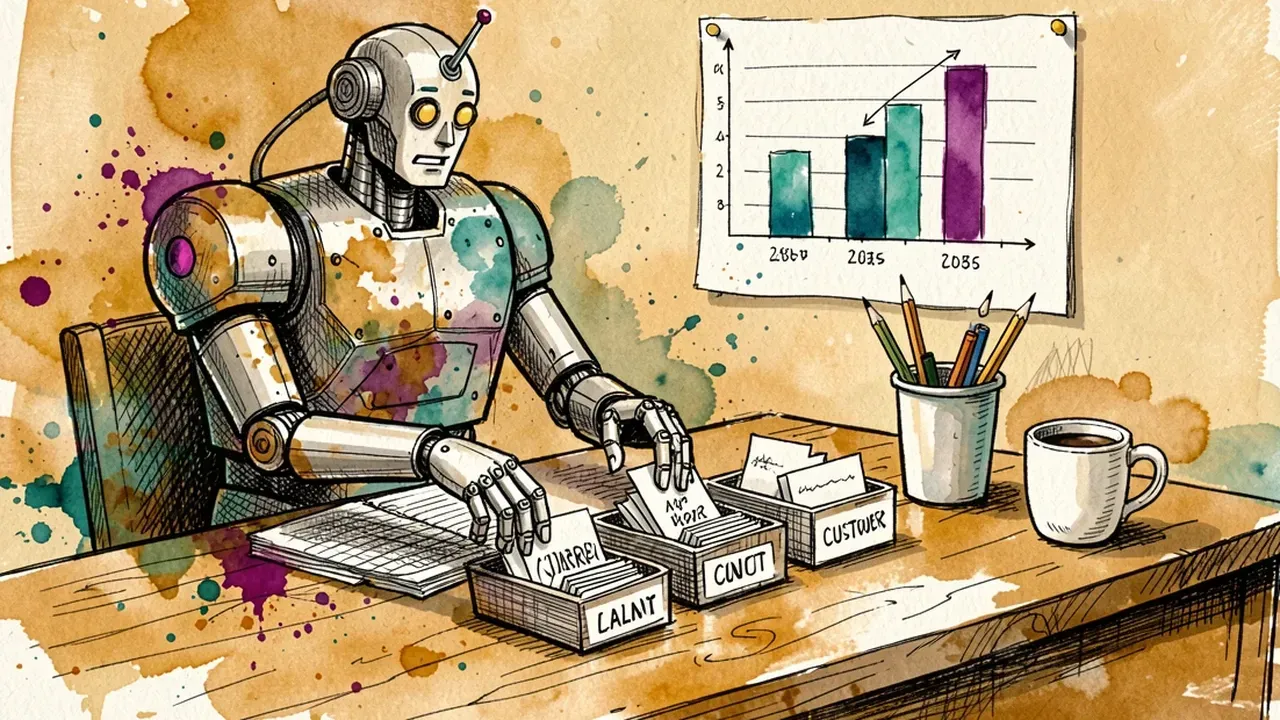
With those three columns you end up with three or four groups. An AI agent can read the base straight from your system (CRM, spreadsheet, e-commerce platform), apply that segmentation on its own and build the lists. The step that blocked everything, “someone pulls the report,” stops existing.
How an AI agent runs the win-back on WhatsApp
A win-back agent opens the conversation, adapts the message to each customer’s history, replies to whatever comes back and pushes the outcome to your system. No human in the middle of every step.
The typical flow looks like this:
Trigger. The agent runs on a schedule (every Monday, the first of every month) and picks out who crossed the inactivity cutoff that week. It’s not a one-time mass blast: it’s a continuous flow, a handful of customers per day, that doesn’t overwhelm whoever handles the replies.
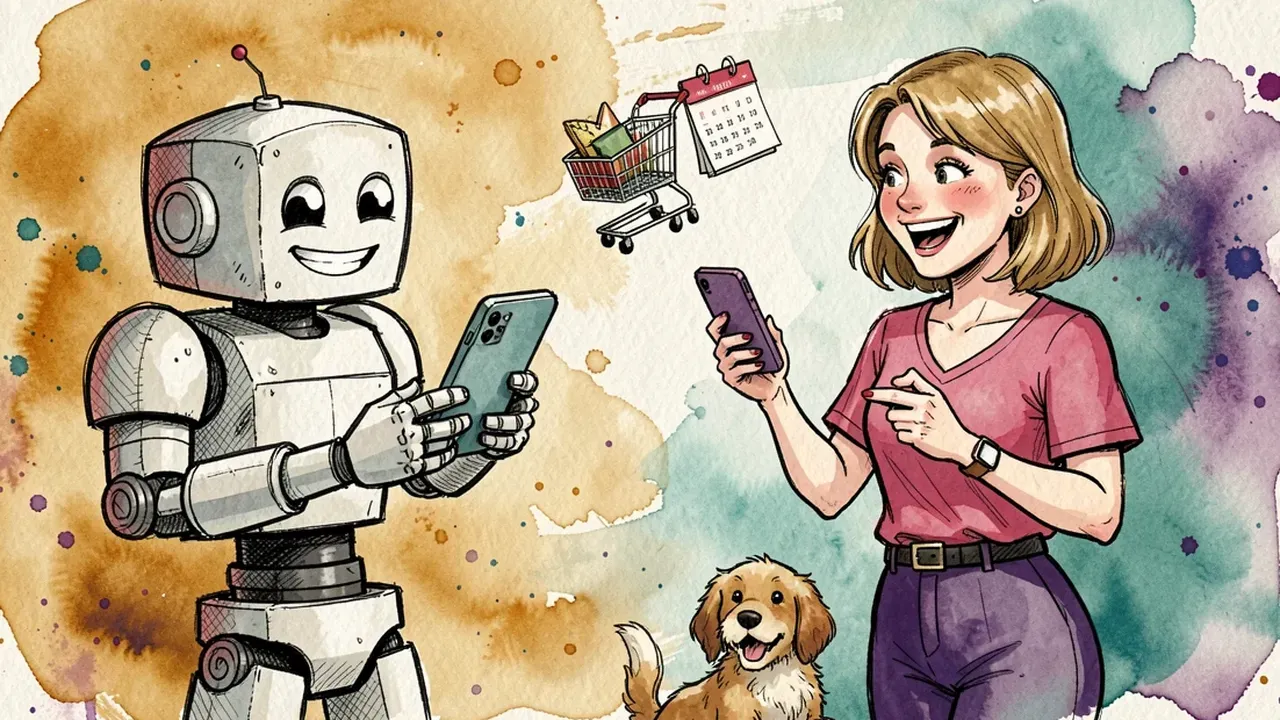
First message. The agent writes an approach that references the person’s real history: what they bought, when, which staff member served them. Not a template with the name swapped in. An eight-purchase customer gets a “we’ve missed you” that acknowledges the relationship. A one-purchase customer gets something lighter, almost a reintroduction.
Reply. This is where AI actually differs from a broadcast tool. When the customer answers “I stopped because it got expensive,” the agent doesn’t fire off an automatic coupon: it asks what weighed on them, offers an alternative within what you’ve authorized, and logs the objection. When they answer “I moved to another city,” the agent thanks them, marks them as not recoverable and stops reaching out. When they answer “oh wow, I forgot about you, yes please,” the agent books the slot or sends the order link right there.
Escalation. A high-ticket customer showing interest, or any customer raising a serious complaint, gets handed to a human with a summary of the conversation. The agent doesn’t try to solve what it shouldn’t.
Logging. Every conversation goes back into the CRM or spreadsheet with a status: won back, not interested, asked to stop, escalated. The list in the drawer becomes a live report.
One thing that helps a lot: the agent respects time of day. Nobody wants a “we’ve missed you” at 11pm on a Sunday. And it respects “no”: an opt-out request is logged instantly and that number is never contacted again, which is a GDPR and LGPD requirement and also plain common sense.
The message that brings people back (and the one that drives them away for good)
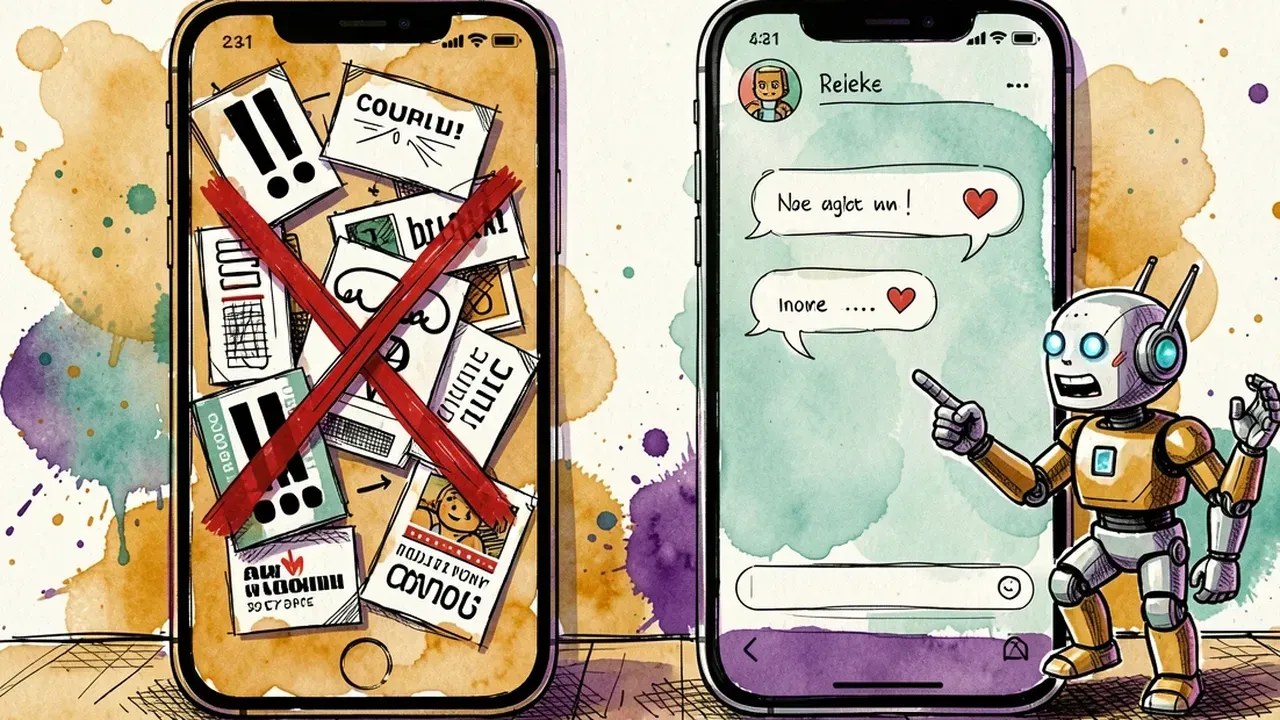
The message that works acknowledges the relationship, gives a concrete reason to return and makes replying easy. The one that drives people away is generic, too urgent and reads like a blast.
Compare two approaches for the same customer, who bought six times from a pet food store and stopped four months ago:
The one that drives away: “Hi! We’ve missed you! Enjoy 10% OFF storewide, this Sunday only! Hurry!”
The one that brings back: “Hi Marina, this is Pet da Vila. It’s been a while since we’ve seen an order for Thor’s food. Is he doing okay? If you switched brands, tell me and I’ll note it. If it just slipped, we can deliver by tomorrow.”
The second one works because it references history (the food, Thor), leaves room to listen (switched brands?), offers something useful (delivery tomorrow) and creates no fake urgency. And it asks before it sells: the first win-back message exists to reopen the conversation, not to close an order.
A few principles that hold in any industry:
- One topic per message. Don’t stack a promo, a product launch and a survey in the same text.
- Discounts are the last resort, not the first. People who come back for a coupon only come back when there’s a coupon. People who come back because they were remembered with context come back to stay.
- Open question, easy answer. “What happened?” invites a conversation. “Please confirm your interest” invites being ignored.
- No invented urgency. “Sunday only” in a message to someone who’s been gone for months sounds exactly like what it is: pressure.
The AI agent applies this automatically because you set the tone, the limits and what it’s allowed to offer. Tone-of-voice guardrails keep it from drifting off brand, and compliance guardrails keep it from promising a discount that doesn’t exist.
How to measure whether win-back is working
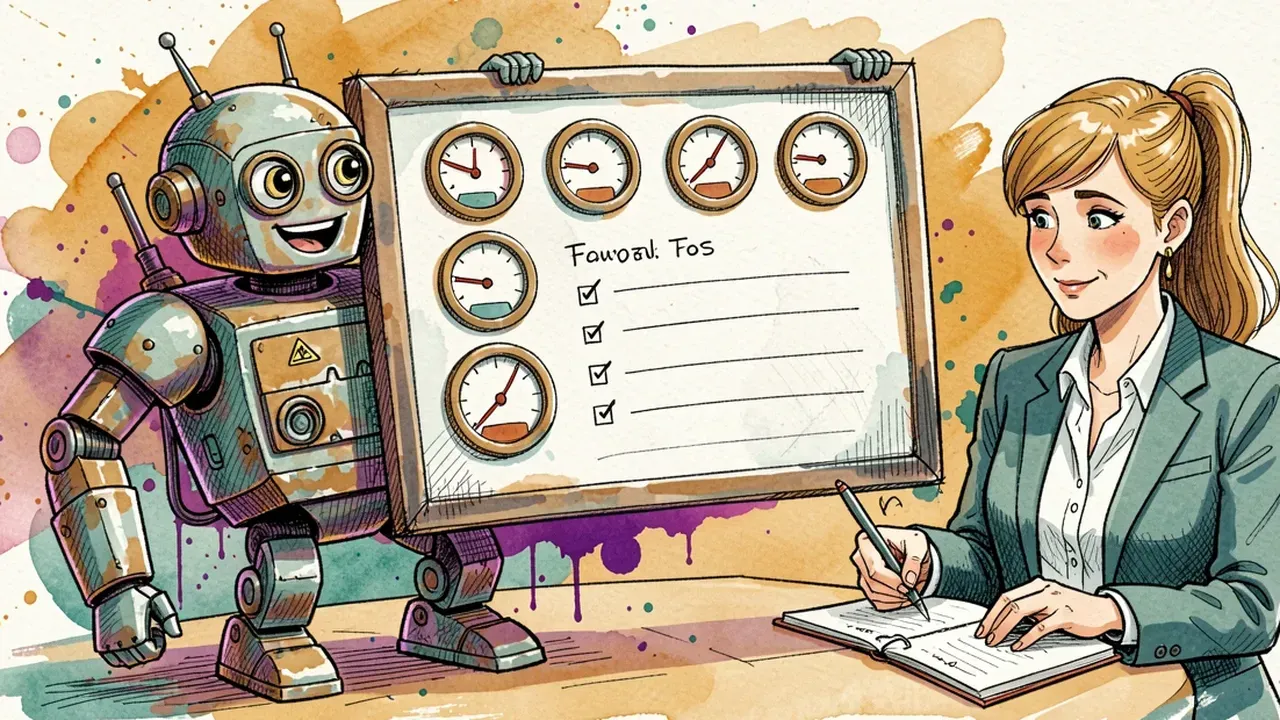
A win-back campaign is measured by four numbers: reply rate, win-back rate, recovered revenue and opt-out rate. All four together, never just one.
Reply rate is how many of the people contacted answered anything at all, positive or negative. It tells you whether the message is opening conversations. Below 10%, the copy is generic or the timing is off.
Win-back rate is how many of the people contacted bought again within a set window, 30 or 60 days. That’s the number that matters to the business.
Recovered revenue is how much those returning customers spent in the period. Compare it with the campaign’s cost (AI credits plus human time on escalations) and you get the real return. Because the agent handles the full cycle, that cost lands far below what a team doing it by hand would spend.
Opt-out rate is how many asked to stop receiving messages. If it climbs, the message is annoying people or you’re contacting people you shouldn’t. It’s the campaign’s brake.
A well-configured agent delivers those four numbers without anyone building a spreadsheet: every conversation is already logged with its status, and the report is a question you ask the agent itself.
And there’s a fifth piece of data that isn’t a metric but is worth gold: the reasons people left. After 200 win-back conversations, you know exactly why customers stop buying. That report tends to change pricing, delivery and product decisions well beyond the campaign.
Where to start
Start with the easiest group: frequent buyers who stopped recently. That’s where the win-back rate is highest and where you learn fastest. Leave the year-old inactives and the one-time buyers for a second round, armed with what you learned in the first.
Set the cutoff, write down what the agent can and can’t offer, and put a human on escalation for high-ticket conversations. The agent does the rest.
If your inactive list has been sitting in a drawer for months, it’s the cheapest place to find revenue this quarter. A SquadOS external agent talks to those customers on WhatsApp 24/7, reads each one’s history, respects anyone who asks to stop, and logs everything with tone and compliance guardrails on from day one.