AI for franchises: consistent customer service across every location, without losing control
How franchise networks use AI agents on WhatsApp to standardize customer service across locations, protect the brand, and see the whole network in one dashboard.
On this page
- Why franchising is a standardization problem, not just a support problem
- What an AI agent solves across the network
- How to build the network’s agent
- Governance: what the franchisor sees and what the location controls
- Common mistakes when rolling AI out to a network
- Practical example: a language school chain with 40 locations
- Metrics to track
- One brand, one voice, every location
A network with 40 locations has 40 WhatsApp numbers. And 40 different ways of answering the same question. At one location, the customer gets the price list in 30 seconds. At another, they wait until the next day. At a third, the clerk invents a promotion the franchisor never approved. The customer doesn’t know these are different locations. To them, it’s all one brand. And the brand is what pays the bill when service drifts off standard.
Franchising is the business model that depends most on standardization and has the least control over service at the front line. An AI agent fixes exactly that blind spot: the same answer, at the same quality, at every location, without taking away from the franchisee what belongs to them.
Why franchising is a standardization problem, not just a support problem
The pain in franchising isn’t message volume. It’s variation. The franchisor invests in an operations manual, training, and brand materials, and the moment a customer sends “how much is it?” to a location’s WhatsApp, the person answering is a clerk who started last week and never opened the manual.
That creates three kinds of loss that never show up in the location’s own report:
- Wrong information with the brand’s name on it. Outdated prices, delivery times that don’t exist, invented promotions. The customer complains about the brand, not the location.
- Response times that swing from minutes to days depending on who’s at the counter at that hour. A lead from the national campaign disappears because one specific location didn’t reply.
- Zero visibility across the network. The franchisor knows how many locations it has, but not how many conversations each one lost, which questions come up most, or where the standard is breaking.
There’s an aggravating factor unique to franchising: the campaign is national, the service is local. Franchisor marketing generates demand for the whole network, and each location converts (or wastes) that demand in its own way. Without a standard at the front line, the network’s media spend becomes a lottery.
What an AI agent solves across the network
An AI agent connected to each location’s WhatsApp answers from the brand’s official knowledge base, in the brand’s official tone, and leaves the location in charge of what is genuinely local.
Pricing, catalog, and policy from a single source. The franchisor maintains one central knowledge base: products, list prices, return policy, standard hours, frequently asked questions. Every location answers from it. Price changed? Change it once and it applies to the whole network the same minute.
Local variation without breaking the standard. Each location has its own address, hours, stock, and regional promotions. That goes into a location-level layer on top of the central base. The Denver agent knows it opens at 9am and has parking. The Miami agent knows it opens at 8am and doesn’t. Both answer questions about the return policy with the same text.
First response in seconds, at any location. A lead from the national campaign arrives at any hour and gets an immediate reply with the right information. If they want to book, buy, or talk to someone, the agent hands off to the location’s human with the full history attached.
Brand voice protected by guardrails. The agent doesn’t invent promotions, doesn’t offer discounts that don’t exist, and doesn’t change how the brand speaks. What comes out of the official base comes out identical at every endpoint.
How to build the network’s agent
The practical path, without needing a technical team at each location:
- Upload the brand’s official base. Service manual, catalog, price list, return policy, warranty, and the 30 most frequent questions locations get today. That’s the material the agent will answer from. If it isn’t in the base, the agent doesn’t answer and escalates.
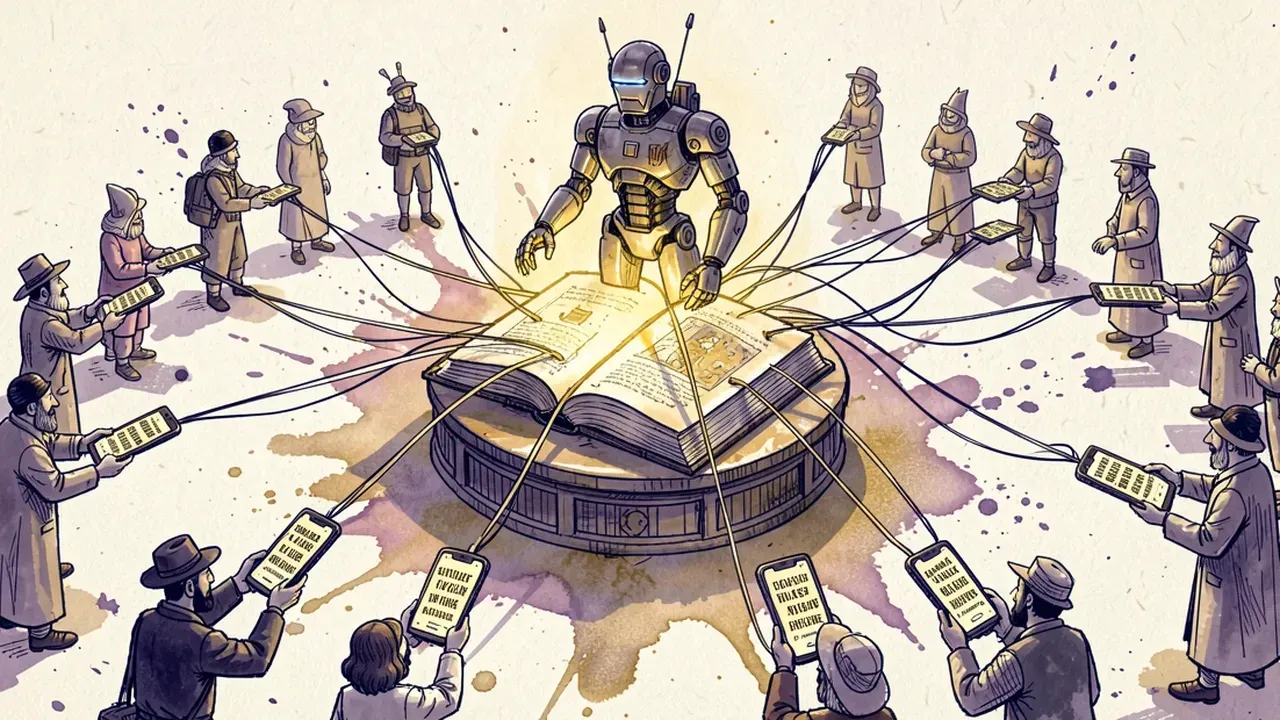
- Create the template agent once. Tone of voice, what it answers, what it escalates, when it closes. That template becomes the network standard: each location gets a copy of it, not a version built from scratch.
- Add each location’s local layer. Address, hours, phone, available stock, approved regional promotion. It’s a small amount of content, and the franchisee maintains it within the limits the franchisor set.
- Connect each location’s WhatsApp. The number stays the location’s own. The customer talks to “the store in the neighborhood,” the way they always did. The difference is who answers first.
- Define escalation triggers. Complaints, negotiation, requests outside the catalog, and any question without an answer in the base go to the location’s human. No agent deciding on its own what needs a person.
- Turn on continuous learning. Questions the agent couldn’t answer at any location show up grouped for the franchisor. If 15 locations got the same question about installment plans, the answer goes into the central base once and resolves all 15.
New locations join the same flow: copy the template agent, fill in the local layer, connect the number. What used to be a week of customer service training becomes an afternoon of setup.
Governance: what the franchisor sees and what the location controls
The part that usually stalls AI projects in franchising isn’t the technology. It’s the division of power. Franchisees don’t want the franchisor reading their WhatsApp. Franchisors don’t want locations changing brand policy on their own. A well-designed agent solves this by separating the layers.
What stays with the franchisor:
- The official knowledge base (product, price, policy, tone).
- The template agent and its guardrails.
- A consolidated view of the network: conversation volume per location, response time, escalation rate, most frequent questions, unanswered questions.
- Audit trail: what the agent answered, based on which passage, at which location.
What stays with the location:
- The local layer (hours, address, stock, approved regional promotion).
- Human service after escalation.
- Its own customers and their history.
This separation is what gets the project through the franchisee council. The franchisor gains consistency and visibility without becoming a watchdog. The franchisee gains a service rep who never misses a shift and never gets the price wrong, without giving up the customer relationship.
Common mistakes when rolling AI out to a network
Letting each location build its own agent. It’s the natural path when the franchisor is slow, and the result is 40 different agents with 40 tones and 40 versions of the return policy. The agent has to be born central and copied, never the other way around.
A central base full of information that changes weekly. Campaign prices, stock, flash promotions: none of that belongs in the fixed base. It goes in the local layer or comes from an integration with the network’s system, otherwise the agent answers with stale data and the location takes the blame.
No clear rule for who updates what. If a location doesn’t know whether it can change its hours in the agent or has to ask headquarters, it updates nothing and the agent goes stale. Write the rule before switching the network on.
Escalation without context. The customer spent five minutes with the agent and the location’s rep asks “how can I help you?”. Every handoff has to carry the full history forward.
Measuring only the network average. Averages hide the location that’s breaking the standard. The dashboard needs to show location by location, or the problem only surfaces when a customer complains on the brand’s page.
Practical example: a language school chain with 40 locations
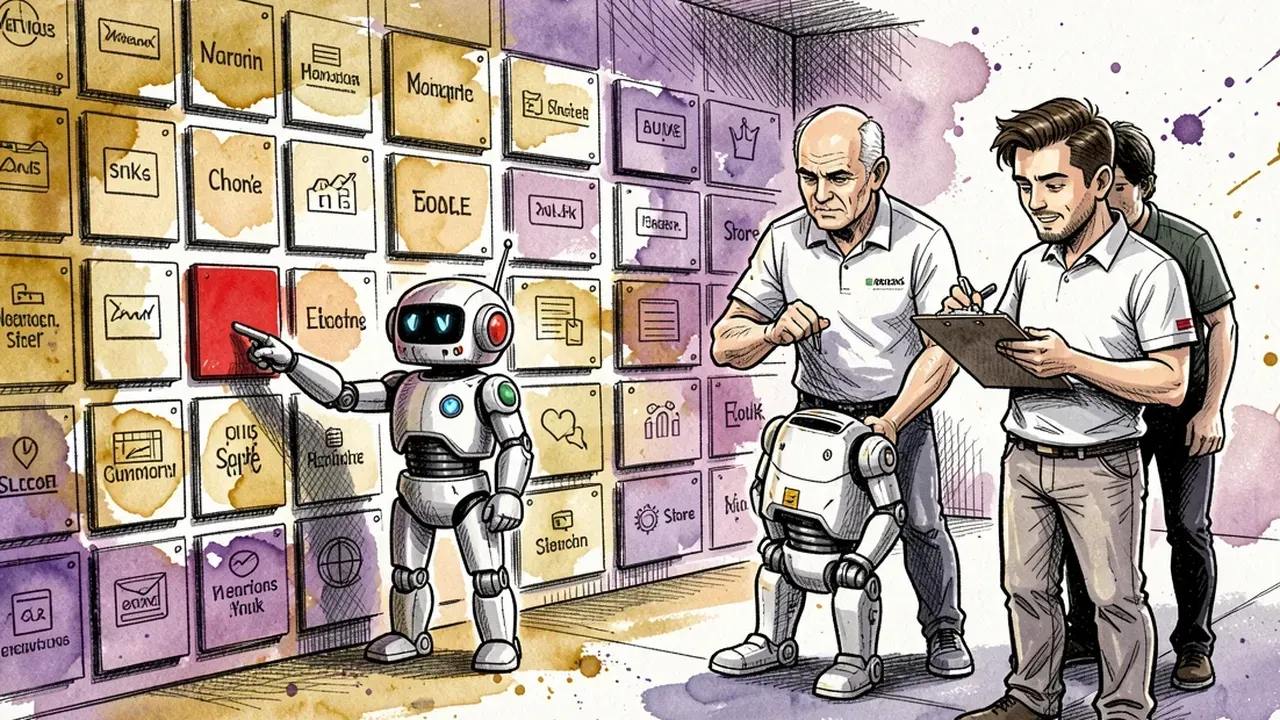
A language school chain with 40 locations had the classic problem: the enrollment campaign ran nationally, the lead landed on the nearest location’s WhatsApp, and conversion varied wildly. Strong locations converted well. Locations with new staff lost leads to hours of silence or to quoting an outdated enrollment fee.
The agent was built once, by the franchisor, from the official base: courses, methodology, list price ranges, pause-and-freeze policy, frequently asked questions from parents and students. Each location received the copy and filled in its local layer: address, class schedules, open seats, approved regional promotion.
In the first campaign with the agent on, time to first response dropped from hours to seconds at every location, no exceptions. Questions about price, schedule, and methodology were answered with the official text, identical at every endpoint. The location’s human stepped in only to book the trial class and negotiate, which is where conversion actually happens.
On the franchisor side, the dashboard showed for the first time which location was escalating too much (a sign of an incomplete local layer) and which questions went unanswered across the whole network. The most common unanswered question was about the certificate at the end of the course. It went into the central base once, and all 40 locations were answering it the same day.
Metrics to track
Time to first response per location. Not the network average. It’s the slow location that loses the national campaign’s lead.
Escalation rate per location. A location escalating far above the others has an incomplete local layer or an audience asking things the base doesn’t cover.
Unanswered questions across the network. The grouped list is the map of what’s missing from the official base. Every item resolved there applies to every location at once.
Lead conversion per location, before and after. That’s the number that justifies the project to the franchisee council: same campaign, same budget, more enrollments (or sales, or bookings) at the front line.
Off-standard information incidents. How many times the agent had to be corrected or a location tried to answer outside the system. It should drop every month. If it doesn’t, the central base or the update rule is wrong.
None of these metrics require a spreadsheet consolidating 40 reports by hand. The network dashboard already shows everything per location and per period.
One brand, one voice, every location
Franchising runs on repeating what works. Front-line customer service was the last part that still depended on whoever was at the counter that hour. SquadOS builds the network’s agent through conversation (no prompt engineering), connects each location’s WhatsApp with native guardrails for tone and information, and gives the franchisor a view of the whole network in one dashboard, while each location keeps what is its own. Start free, no credit card.