AI for restaurants and delivery: automate orders and reservations on WhatsApp
How restaurants and delivery businesses use WhatsApp AI agents to take orders, confirm reservations, and cut no-shows without overloading staff.
On this page
- Why restaurants are a special support case
- What an AI agent actually solves
- How to set up the automated order flow
- Direct WhatsApp vs delivery marketplace
- Dynamic menus: hours, promos, and sold-out items
- Common mistakes when automating restaurants and delivery
- Real example: a three-location delivery chain
- Metrics to track
- One agent, every order
Friday, 8pm. The restaurant’s WhatsApp gets an order, a menu question, a reservation confirmation, and a complaint about a late delivery, all in the same twenty-minute window. One person is handling all of it, and that same person is also helping out on the floor. That’s the moment a WhatsApp AI agent stops being a tech-company luxury and becomes basic restaurant infrastructure.
Why restaurants are a special support case
Most businesses spread message volume across the day. Restaurants don’t. Traffic concentrates in two or three short windows (lunch, dinner, weekends), and those are exactly the windows where the team is also busiest on the operational side: kitchen full, driver leaving, table waiting.
That creates a specific pattern of lost revenue:
- Orders that take too long to get confirmed because nobody saw the message in time, so the customer orders somewhere else.
- Reservations with no confirmation, which turn into no-shows because nobody called to remind the guest.
- Repeated menu and hours questions, which eat up the time of whoever should be processing real orders.
None of these three problems needs a human making a complex judgment call. They’re predictable questions, arriving exactly when the team has the least time to answer them.
There’s also a hidden cost. A restaurant that depends on delivery marketplaces pays a 12% to 27% commission per order, depending on the platform and plan. Every order that moves from the marketplace to the restaurant’s own WhatsApp is margin back in the owner’s pocket. But WhatsApp without automation turns into the exact bottleneck described above, so the restaurant gets stuck between paying a high commission or overloading staff during peak hours.
What an AI agent actually solves
An agent connected to the restaurant’s WhatsApp covers what’s repetitive and frees up the team for what needs human judgment:
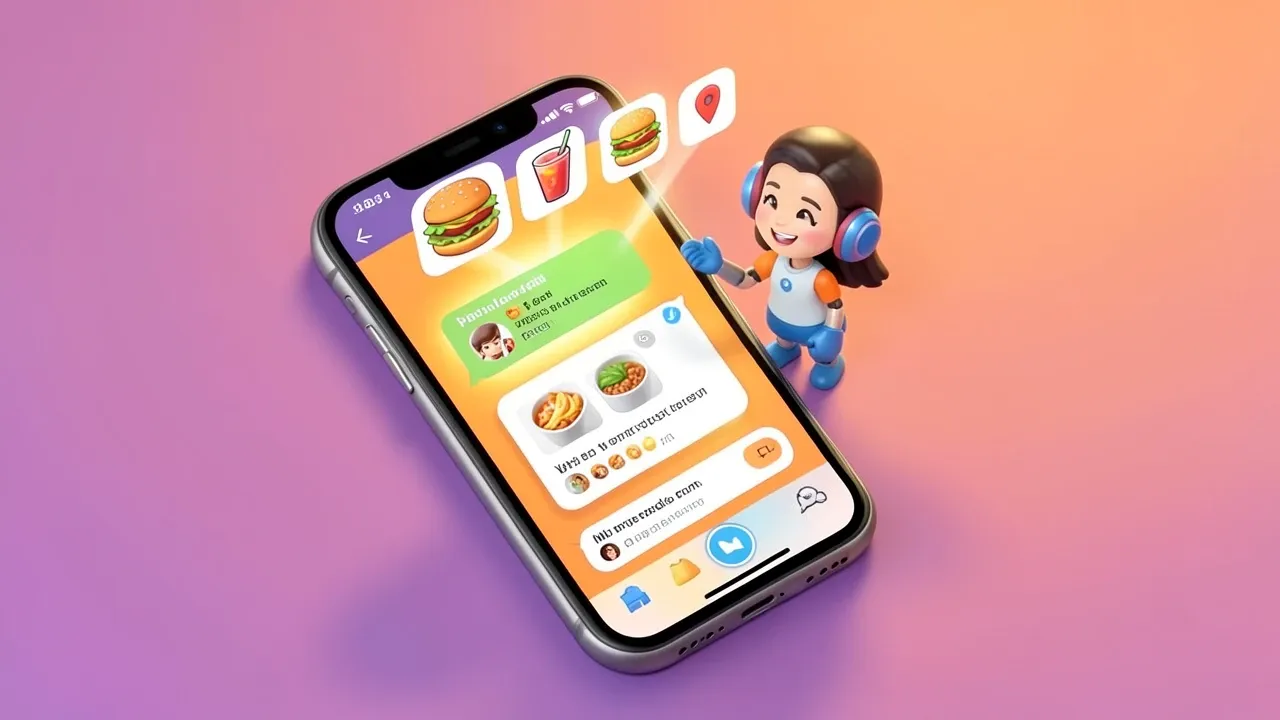
Menu and availability. A customer asks “do you have a gluten-free option?” or “what’s today’s special?” and gets an instant answer, pulled from the restaurant’s real knowledge base, not a generic memorized menu.
Guided ordering. The agent walks through the order (item, size, notes, delivery address) and returns a clear summary before confirming, the way a good server would.
Reservations and confirmation. Books the table, confirms it the day before, and reschedules if the customer replies they can’t make it. This directly attacks no-shows, the same problem that empties the schedule at clinics and medical practices when nobody confirms in advance.
Order status. “Where’s my order?” is the most repeated question in any delivery business. The agent answers with the real status, without pulling anyone out of the kitchen or off the road.
How to set up the automated order flow
The practical path, without needing a dedicated technical team:
- Upload the menu as a knowledge base. Items, prices, options, restrictions. The agent only answers with what’s there, never inventing a dish that doesn’t exist.
- Define the order flow. Item → quantity → notes → delivery method → address → confirmation. The agent follows that order in every conversation.
- Connect confirmation to the kitchen. A confirmed order needs to land somewhere the kitchen team already uses, not another isolated screen.
- Set up the reservation reminder. An automatic message one day before, with a one-tap option to confirm or reschedule.
- Define the escalation trigger. Complaints, cancellations, or anything outside the script goes straight to a human, with the conversation history attached.
With that running, the support team ends up handling only what truly needs judgment: complaints, special orders, an undecided customer who wants to talk before deciding.
Direct WhatsApp vs delivery marketplace
Marketplaces solve discovery (the new customer who doesn’t know the restaurant yet finds it there). But for a repeat customer, who already knows what they want and already has the number saved, forcing them through the app costs commission without adding any extra benefit for the restaurant.
The combination that works in practice:
- Marketplace for acquisition, accepting the commission as the cost of bringing in new people.
- Automated WhatsApp for repeat orders, nudging a customer who already ordered once to order direct next time (a small first-direct-order coupon works well here).
- The same quality of service on both channels, because the customer doesn’t distinguish “expensive channel” from “cheap channel”, they just want a fast, correct order.
Without WhatsApp automation, that channel shift doesn’t happen, because the team simply can’t handle the volume that would move there.
Dynamic menus: hours, promos, and sold-out items
A restaurant’s menu changes more than almost any other business. The daily special rotates, an item sells out mid-shift, a Tuesday promo only applies from 6pm to 9pm. An agent working off a static knowledge base, updated once a month, quickly becomes a source of errors.
The right way to handle it:
- Mark items sold out instantly, straight from whoever’s in the kitchen, without depending on someone editing a separate menu document.
- Bake time rules into the knowledge base itself, not just into someone’s memory. A Tuesday promo needs to be labeled “valid Tuesday, 6-9pm” in the content the agent actually consults.
- Regularly review unanswered questions. That’s exactly what AutoLearn does: it groups questions the agent didn’t answer well (an ingredient it didn’t know, a dish that’s gone from the menu) and suggests the update, one click, for whoever manages the knowledge base.
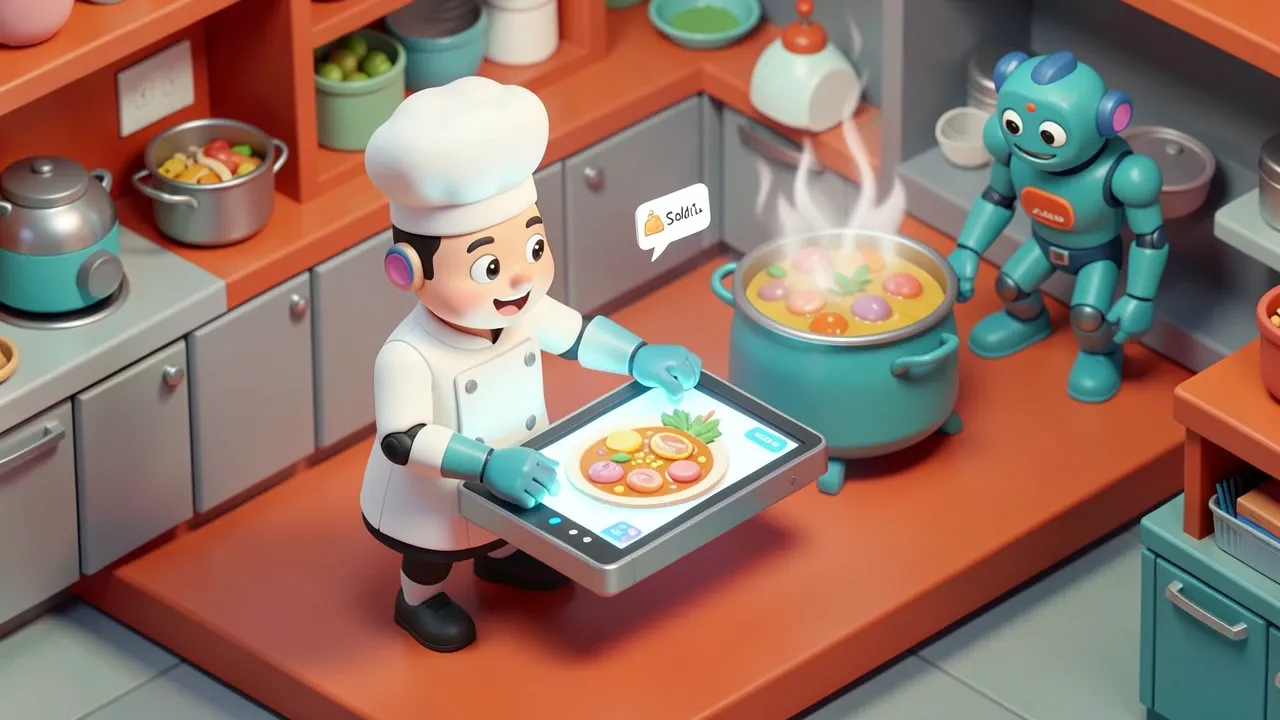
That avoids the most annoying scenario of all: a customer confirms an order for a dish the kitchen no longer has, and someone has to call to walk it back after it’s already confirmed.
Common mistakes when automating restaurants and delivery
Outdated menu in the agent’s knowledge base. If a dish is gone or the price changed and the base wasn’t updated, the agent confirms something the kitchen doesn’t have. That breaks trust fast.
An order flow that’s too rigid. A customer who already knows what they want shouldn’t be forced through six questions before checking out. The agent needs to recognize when to skip a step.
No plan for complaints. Delays and order mistakes happen. If the agent tries to “solve” a complaint on its own with a made-up discount or a promise the restaurant can’t keep, the problem gets worse. Complaints always escalate to a human.
Ignoring business hours. An order placed at 11pm for a restaurant that closes at 10pm needs a clear answer about the next available slot, not silence until the following day.
Real example: a three-location delivery chain
A burger chain with three locations had one central WhatsApp number for orders, staffed by two people on rotation. During peak hours, average time to first response passed seven minutes, and about 15% of customers who sent a message simply stopped replying (they’d ordered somewhere else).
With an agent covering the menu, guided ordering, and delivery status, time to first response dropped to a few seconds at any hour. The two support staff shifted focus to complaints and large corporate orders, the cases that actually need someone deciding. Orders lost to slow replies dropped, because the customer never had to wait again.
On the reservations side, the same chain had one location with a dining room that ran on phone reservations only. Without a reminder, roughly one in five booked slots turned into an empty table on Friday and Saturday nights, exactly the busiest days. After an automatic reminder started going out the day before, with a one-tap confirm-or-reschedule option, no-shows dropped consistently, and the floor team stopped losing time calling to confirm reservations by hand.
Metrics to track
Time to first response, especially inside peak windows. It’s the single number that most affects lost orders.
Order completion rate. How many order conversations reach confirmation, without the customer dropping off midway.
Reservation no-show rate, before and after the automatic reminder goes live.
Volume escalated to humans. Shows whether the agent is genuinely resolving the repetitive stuff or just pushing work downstream.
Average ticket by channel. Comparing direct WhatsApp to marketplace helps decide where to invest promotion effort: if the direct order has a similar or higher ticket with zero commission, every dollar shifted to that channel is worth more.
None of these metrics require a manual spreadsheet. The support dashboard already shows response time, completion rate, and escalated volume by period, ready to compare before and after automation goes live.
One agent, every order
A menu that changes, a weekend promo, a large-party reservation: all of it needs an agent that actually knows the restaurant’s real operation, not a generic FAQ bot. SquadOS builds that agent by chatting (no prompt engineering), connects it to WhatsApp with native guardrails, and keeps the knowledge base current with AutoLearn, which learns from every real conversation. Start free, no credit card.