AI WhatsApp debt collection: how to cut delinquency without sounding like a pushy bot
An AI agent on WhatsApp can negotiate deadlines, send reminders and recover payments 24/7. See how to build the flow, get the tone right, and stay compliant.
On this page
Collection calls have a shrinking answer rate: nobody picks up an unknown number anymore. Text reminders get buried under app notifications. Collection emails barely get opened. Yet the delinquent customer is on WhatsApp all day long, the same channel where they talk to family and close purchases. An AI agent on that channel changes the collection response rate directly, but only when the tone, timing and escalation rules are right.
This guide covers how to build a WhatsApp AI collection flow that actually works, without sounding like a pushy bot and without opening up compliance risk.
It’s worth drawing a line before we start: AI-powered WhatsApp collection isn’t a mass blast with the customer’s name swapped into a template. Broadcast tools already did that before AI existed, and that kind of generic message is exactly what trained customers to ignore automated collections in the first place. What a real agent changes is the ability to hold a conversation, understand the reply, negotiate within a rule set and decide when to escalate, instead of just pushing a reminder and waiting.
Why WhatsApp beats traditional collections

Traditional collections lose efficiency because they depend on channels customers avoid: a call from an unknown number reads as spam before anyone even answers, a text message leaves no room to negotiate anything beyond a blunt reminder, and a collection email usually lands straight in the promotions tab.
WhatsApp solves all three problems at once: it’s a channel people already open several times a day, it allows a real conversation (installment plans, new due dates, questions about the amount owed), and it arrives under a recognizable company name instead of a random number. Companies that swap phone collections for a WhatsApp agent typically see response rates climb well above what any mass SMS campaign can achieve.
How the collection agent works in practice

A collection agent doesn’t blast a mass message and wait. It follows a flow with a decision at every step:
- Reminder before the due date. A simple, non-judgmental message letting the customer know the invoice is coming due soon, with the payment link already attached.
- First contact after the due date. Neutral tone, asking whether the customer already paid or needs help resolving it, never a threat.
- Negotiating a new date or installment plan. The agent comes prepared with the options the company has pre-approved (new due date, installments, a discount up to a limit) and closes the agreement without needing manual approval for every single case.
- Escalation to a human. A customer who disputes the charge, claims a billing error, or asks for terms outside what the agent can offer goes straight to an analyst’s queue, with the full conversation history attached.
The core value isn’t replacing the collections team. It’s freeing them from sending reminders one by one so they can negotiate only the cases that actually require human judgment.
A real conversation example helps show the right tone for this flow:
Agent: Hi Sarah! I noticed your July invoice was due 3 days ago. Can I help you sort that out now? Customer: Oh, totally forgot. I can pay next week, on the 20th. Agent: No problem. I can move the due date to the 20th with no extra fees. I’ll confirm and send you the updated payment link for that date, sound good? Customer: Yes, thanks. Agent: Done! I’ll send you a reminder the day before, on the 19th. Just reach out here if anything comes up.
Notice the agent doesn’t push, doesn’t threaten, and doesn’t get stuck on a single response. It offers the option it’s already authorized to give (moving the date), confirms the agreement and schedules the next check-in on its own. That small, resolution-focused interaction is what separates a good collection agent from a bot that just repeats “your invoice is overdue” until the customer goes silent.
Tone, timing and escalation: how not to sound like a pushy bot

Poorly done collections push away even customers who pay on time. Three adjustments make the difference between an agent that recovers payments and one that generates complaints:
- Business hours, always. Collection messages outside the hours allowed by local regulations are a common source of formal complaints, on top of a bad experience. The agent needs to respect a fixed time window without exception.
- A helpful tone, not a threatening one. A line like “we noticed a late payment, can I help you sort it out?” converts far better than “your invoice is overdue, please settle it.” The agent’s voice should sound like someone trying to solve the problem together, not someone collecting from above.
- A clear limit on follow-ups. A customer who doesn’t respond after two or three attempts shouldn’t get a daily message. That fatigues people and tanks the opt-out rate for the entire channel, including communication that has nothing to do with collections.
These three adjustments cost almost nothing to configure and prevent the most common complaint about automated collections: feeling like an insistent bot that doesn’t listen.
There’s a fourth adjustment that makes a real difference and often gets overlooked: varying the approach by delinquency profile. A customer who’s late for the first time, with an otherwise clean payment history, deserves a lighter-touch reminder. A repeat delinquent customer calls for a more direct approach, though still without threats. Treating both profiles with the same script needlessly annoys the good payer and doesn’t solve the repeat customer’s problem, since they’ve already learned to tune out the pattern.
Guardrails, privacy and the metrics that matter
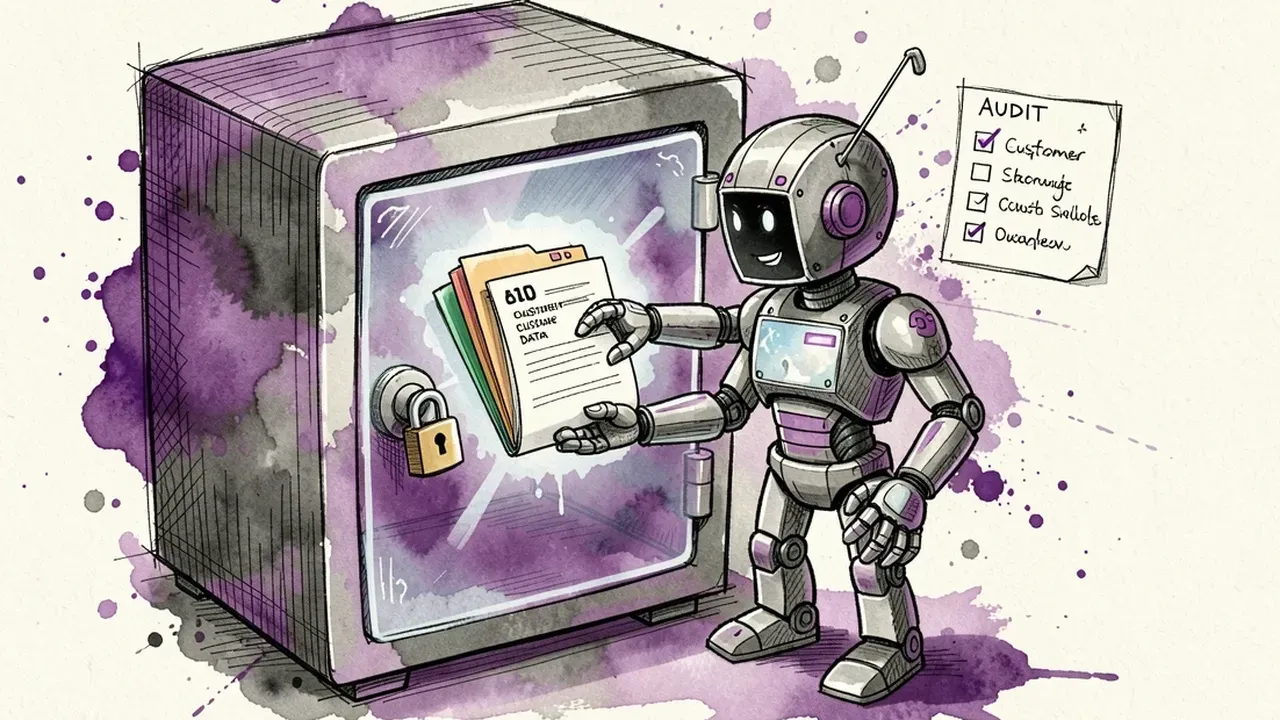
Collections handle sensitive financial data (amount owed, personal identifiers, payment history), which calls for extra care around data privacy regulations like GDPR. Three guardrails aren’t optional for this kind of agent:
- Identity confirmation before disclosing amounts. The agent shouldn’t reveal a debt amount or financial detail before confirming it’s talking to the actual account holder.
- Full audit trail. Every payment promise, every installment agreement and every discount negotiation gets logged, so the company can prove what was agreed if the customer disputes it later.
- Clearly defined autonomy limits. The agent negotiates within pre-approved ranges (discount up to X%, installments up to Y payments). Outside that, it escalates to a human instead of risking a promise the company won’t honor.
To track whether the flow is working, three metrics tell the real story: response rate (how many customers reply to the first message), payment promise rate (how many close a deal right inside WhatsApp), and recovery rate (how much of that promised amount actually comes in). Companies that only track messages sent are measuring the wrong thing.
It’s worth tracking these three metrics broken down by delinquency profile (first-time versus repeat) and by debt amount range. Recovery rate tends to run much higher on small debts the agent resolves quickly on its own, and lower on large debts that need human negotiation, which helps calibrate when it’s worth escalating a case earlier instead of letting the agent keep trying on its own up to the limit.
How this fits what you already use
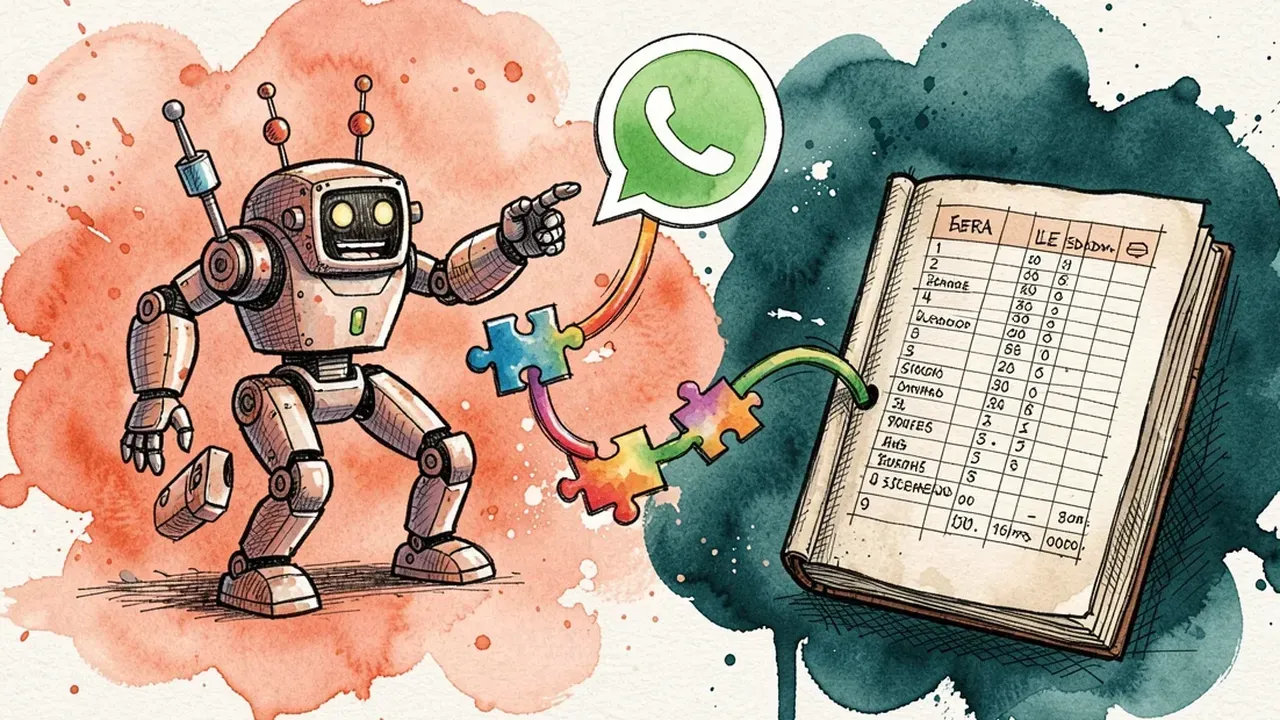
Automated collections don’t replace the finance system or ERP that already tracks who owes what. The agent sits as a conversation layer on top of what’s already there: it checks invoice status in the current system, runs the negotiation on WhatsApp, and writes the result back, with no platform migration or weekly manual spreadsheet export required.
That matters because the most common reason automated collection projects stall isn’t the AI technology itself. It’s a poorly resolved integration with the system that already holds the real data on who owes what and since when. An agent that pulls that data directly from the source, instead of relying on a manually exported spreadsheet, is what separates a project that runs on its own every day from one that needs someone feeding it by hand.
If your company wants to recover payments over WhatsApp without sounding like an insistent bot and without opening up compliance risk around financial data, SquadOS builds this 24/7 external agent with you, with native PII guardrails and escalation to a human whenever the case calls for it.